Moken (Xiamen) Industrial Co., Ltd.
Leave Your Message

How to Choose the Right Double O Ring for Your Needs?

Choosing the right Double O Ring begins with understanding the application, not browsing a size chart alone. A ring that seals perfectly in a laboratory may fail beside a hot pump or vibrating valve. Temperature, pressure, fluid type, movement, groove design, and installation space all influence performance. Even a small mismatch can create leakage, compression damage, or premature wear.

Dr. Robert Flitney, a respected sealing engineer and author, offers a practical principle: “The seal must be selected for the application, not merely for the groove.” That advice should guide every Double O Ring decision. Material matters. Nitrile may suit petroleum-based fluids, while EPDM often performs better with water, steam, and selected chemicals. Fluorocarbon compounds can tolerate higher temperatures, but they are not automatically suitable for every fluid.

Start with the operating details.

Measure carefully.

Then question the assumptions.

This guide will examine sizing, elastomer selection, pressure limits, temperature ranges, and groove conditions. It will also consider dynamic movement, surface finish, lubrication, and installation technique. These details are easy to overlook, especially when a standard part appears close enough. Close enough can still leak.

A reliable selection process should combine manufacturer data, application testing, and experienced engineering judgment. Product charts provide direction, not certainty. Real equipment may face pressure spikes, chemical exposure, poor alignment, or unexpected heat. No guide can replace validation under actual conditions. That is an uncomfortable limitation, but ignoring it creates greater risk. The right Double O Ring is not simply the cheapest or most common option. It is the one that maintains a dependable seal throughout the equipment’s expected service life.
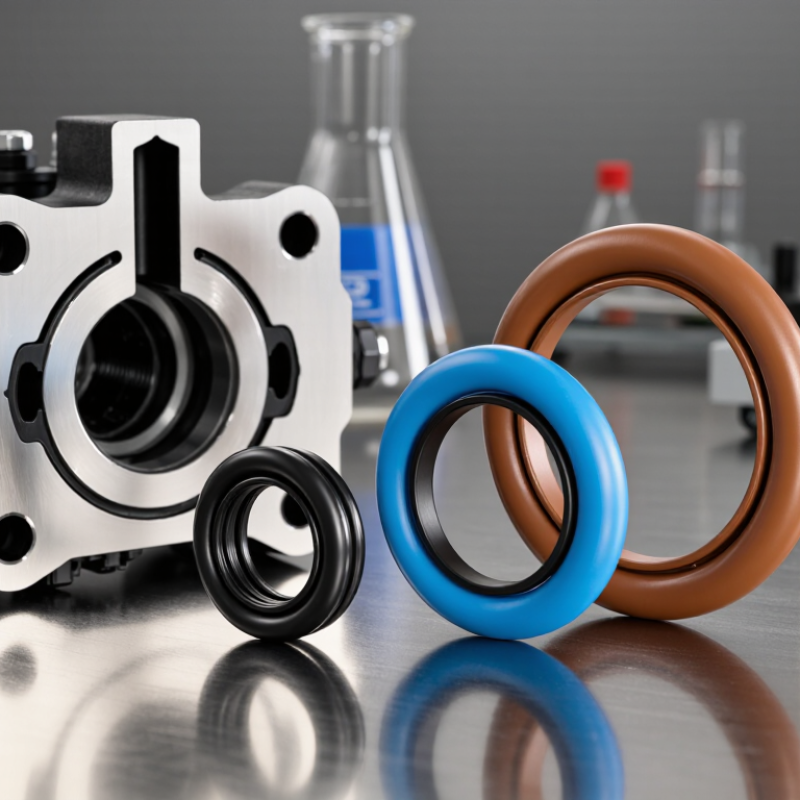
How to Choose the Right Double O Ring for Your Needs?

Define Seal Conditions: Pressure, Temperature, Speed, Media, and AS568 Size

How to Choose the Right Double O Ring for Your Needs?

Choosing a double O ring starts with clear seal conditions. Record the pressure on both sides, including pressure spikes during startup. A static seal may tolerate different loads than a rotating or reciprocating seal. Temperature also matters. Check continuous heat, short-term peaks, and nearby heat sources. A material that survives 120°C may fail quickly at 150°C.

Speed affects friction, heat, and wear. Note shaft speed, stroke rate, surface finish, and lubrication. Then identify the media: oil, water, chemicals, gas, or abrasive fluid. Compatibility charts help, but real testing remains essential.

I have seen a seal appear suitable on paper, yet swell after several operating hours. AS568 size is equally important. Match the dash number, inside diameter, and cross-section carefully. Groove depth and squeeze must support the design without over-compression.

Tips: Write the conditions beside the drawing. Confirm minimum and maximum values. Check pressure direction and extrusion clearance. Do not select material by temperature alone. A small sizing mistake can create a large leak. If data is missing, pause and measure it. Guessing sometimes works, but it is not a reliable engineering method. Review the choice after testing, because field results may reveal friction, swelling, or unexpected wear.

Match Elastomer to Service: NBR, EPDM, FKM, and ISO 3601 Guidance

How to Choose the Right Double O Ring for Your Needs?

A double O-ring seal needs more than the correct diameter. Match the elastomer to temperature, fluid, pressure, and movement. ISO 3601-1 defines O-ring sizes, tolerances, and designation practices for reliable selection. Measure the groove and shaft carefully. A small mismatch can create twisting, leakage, or premature wear.

NBR suits mineral oils, hydraulic fluids, and moderate temperatures, commonly around -30°C to 100°C.

EPDM handles hot water, steam, ozone, and weathering, often from -50°C to 150°C. Avoid EPDM with petroleum oils.

FKM provides strong resistance to fuels, many chemicals, and higher temperatures, typically approaching 200°C.

These ranges are practical guides, not guarantees. Compound formulation changes performance.

Pressure needs equal attention. ASTM D2000 uses standardized material classifications and test methods for rubber performance, including heat and fluid resistance. ISO 3601-5 also addresses elastomer quality and acceptance considerations.

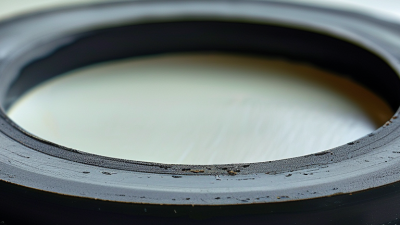
In field inspections, I check swelling around the inner ring first. It often reveals chemical incompatibility. I also inspect flattening, cuts, and spiral marks.

Not every failure is a material failure. Poor lubrication, excessive squeeze, rough surfaces, or installation damage may be the real cause.

I sometimes choose a material too quickly. Service history should challenge that decision. Test the seal with the actual fluid, temperature, and pressure whenever possible.

Choose 70 Shore A Hardness and Verify Static Squeeze of 10–30%

How to Choose the Right Double O Ring for Your Needs?

For many static double O-ring assemblies, 70 Shore A hardness offers a practical balance between sealing force and installation effort. It can conform to small surface irregularities without becoming excessively difficult to fit. ASTM D2240 defines the Shore A method for measuring elastomer hardness, but hardness alone does not confirm sealing performance. Temperature, fluid exposure, pressure, and groove design still matter.

Verify static squeeze between 10% and 30% using the actual cross-sectional diameter. The calculation is simple: (ring diameter minus gland gap) divided by ring diameter, multiplied by 100. Use ISO 3601 dimensional guidance when checking the ring and groove. A target near 20% is often a sensible starting point. Not always. Thermal expansion, coating thickness, and compression tolerances can shift the real value. Measure the installed gap, not only the drawing.

Keep the sealing surfaces clean and inspect them under strong side lighting. Even a small scratch can create a leakage path. Avoid excessive squeeze, which may increase friction and accelerate compression set. In paired-ring designs, two seals do not automatically provide twice the reliability. Misaligned grooves or uneven loading can make the second ring ineffective. Test the selected material in the real fluid and temperature range; published compatibility charts are useful, but field conditions can be less tidy.

Check Groove Dimensions, Stretch, and Extrusion Gaps Against ISO 3601

How to Choose the Right Double O Ring for Your Needs?

A double O-ring arrangement needs more than a matching diameter. Measure the groove width, depth, corner radius, and surface finish. Check both seal grooves with a calibrated gauge. Small errors can create uneven compression. Do not guess.

Compare the O-ring’s inside diameter and cross-section with ISO 3601 dimensions and tolerances. Then calculate stretch over the installed diameter. Excessive stretch can reduce cross-section and shorten service life. Too little stretch may allow twisting during assembly.

In practice, I have seen seals fail because technicians checked the ring, but ignored the groove. That was an expensive lesson.

Extrusion gaps also deserve close attention. Pressure, temperature, material hardness, and clearance all affect the permitted gap. Use ISO 3601 as a dimensional reference, but confirm groove design with application data. The standard does not replace an engineering review. Higher pressure may require tighter clearances or backup rings.

Check compression after installation, especially in the gap between the two seals. A feeler gauge can reveal uneven spacing. Clean the groove before inspection. Even a small metal chip can damage the sealing line.

If the design looks acceptable on paper, test it under real pressure and temperature cycles. My own preference is to inspect the first assembled unit twice, because assumptions often survive the first check.

Validate Pressure, Leakage, and Compression Set Through Industry Testing

Choosing a double O ring requires more than matching its diameter. Confirm the working pressure, temperature, fluid exposure, and groove dimensions first. A softer seal may conform well to minor surface marks, but excessive compression can accelerate wear. Harder compounds can resist extrusion, yet they may leak when installation surfaces are imperfect.

Industry testing turns these assumptions into evidence. Pressure testing should include the expected operating level, pressure spikes, and repeated cycles. Inspect for extrusion, twisting, and visible damage after each cycle. Leakage testing may use air, nitrogen, or the actual service fluid, depending on the application. Hold the assembly under pressure long enough to expose slow leakage. A quick pass is not enough.

Compression set testing is equally important. Common methods, including ASTM D395-based procedures, measure how well the ring recovers after controlled heat and compression. Test conditions should reflect real service, not only convenient laboratory settings. I have seen a ring pass a short pressure test but fail after extended compression. That result exposed a weak assumption in the original design. Record dimensions before and after testing, including groove fill and ring cross-section. Small changes matter. A qualified laboratory can improve repeatability, but clear test instructions remain the engineer’s responsibility.

How to Choose the Right Double O Ring for Your Needs? - Validate Pressure, Leakage, and Compression Set Through Industry Testing

Selection or Validation Dimension Typical Engineering Data Recommended Industry Test or Reference What the Result Indicates
Elastomer selection for general hydraulic service Nitrile rubber: approximately −30 to +100 °C for many standard compounds; good resistance to mineral oils and hydraulic fluids. Fluid compatibility screening, volume change, hardness change, and tensile-property retention after immersion. Confirms whether the seal can maintain elasticity and dimensional stability in the actual fluid.
High-temperature or weather exposure Fluoroelastomer compounds commonly cover approximately −20 to +200 °C, depending on formulation and exposure time. Thermal aging, compression-set testing, and post-aging leakage inspection. Lower permanent deformation after aging generally supports better sealing at elevated temperature.
Low-temperature flexibility Silicone rubber is often selected for approximately −60 to +200 °C, but it has limited resistance to abrasion and many fuels. Low-temperature retraction or flexibility testing and visual inspection for cracking. Indicates whether the O-ring remains resilient enough to follow the mating surfaces during cold starts.
Hardness selection Common O-ring hardness grades are approximately 70 Shore A; softer grades improve low-pressure conformity, while harder grades improve extrusion resistance. Shore A hardness measurement at a controlled temperature, using multiple points around the part. Verifies compound consistency and helps match the seal to pressure, gap, and assembly conditions.
Cross-section and gland fill A larger cross-section generally provides greater tolerance to surface imperfections. Gland fill is commonly controlled below 85% to allow thermal expansion. Dimensional inspection of inside diameter, cross-section, gland width, and gland depth. Shows whether the seal has sufficient room for expansion without excessive friction or extrusion.
Radial or axial compression Static applications often use approximately 15–30% compression; dynamic applications generally require lower compression to control friction and heat. Gland measurement followed by calculated squeeze verification and assembly-force measurement. Confirms adequate initial contact pressure without over-compressing the elastomer.
Pressure and extrusion resistance Allowable pressure depends on hardness, clearance gap, temperature, lubrication, geometry, and the use of backup rings; no universal pressure rating applies to every O-ring. Pressure ramp testing with the actual gland, mating materials, clearance, fluid, and temperature. Reveals leakage, nibbling, extrusion, or permanent damage under representative operating conditions.
Leakage performance Acceptance limits should be defined by the application, such as no visible leakage, a specified pressure-decay limit, or a measured leak-rate limit. Pressure-decay, helium, air-under-water, or liquid leak testing using the complete assembly. Separates seal-material problems from gland, surface-finish, assembly, or contamination problems.
Compression set Lower compression-set values generally indicate better recovery after prolonged compression; the acceptable limit must reflect temperature, time, and material. ASTM D395 Method B or ISO 815-1 compression-set testing at the specified temperature and duration. Estimates the ability of the O-ring to maintain sealing force after long-term compression.
Manufacturing and dimensional quality Critical defects include surface cracks, cuts, voids, flash, excessive parting-line mismatch, and dimensional values outside the selected size tolerance. Visual inspection and dimensional verification according to ISO 3601 or the applicable drawing specification. Confirms that the O-ring is suitable for assembly and will not introduce avoidable leakage paths.
Surface finish and installation Avoid sharp edges; use lead-in chamfers, clean grooves, compatible lubrication, and installation tools that do not cut or twist the seal. Assembly validation followed by pressure cycling and post-test inspection for cuts, twisting, flattening, or abrasion. Demonstrates whether the selected double O-ring arrangement remains reliable through installation and repeated operation.

Note: The temperature ranges and compression guidance above are typical engineering references, not universal ratings. Final selection should be validated with the actual fluid, pressure, temperature, gland geometry, clearance gap, motion, and acceptance criteria.