Moken (Xiamen) Industrial Co., Ltd.
Leave Your Message

China Best Gas Regulator O Ring Supplier?

Choosing the best Gas Regulator O Ring supplier in China requires more than comparing catalog prices. A dependable supplier should understand sealing performance, pressure conditions, temperature changes, and material compatibility. These details matter inside a regulator, where a small O ring can affect safety, leakage control, and service life.

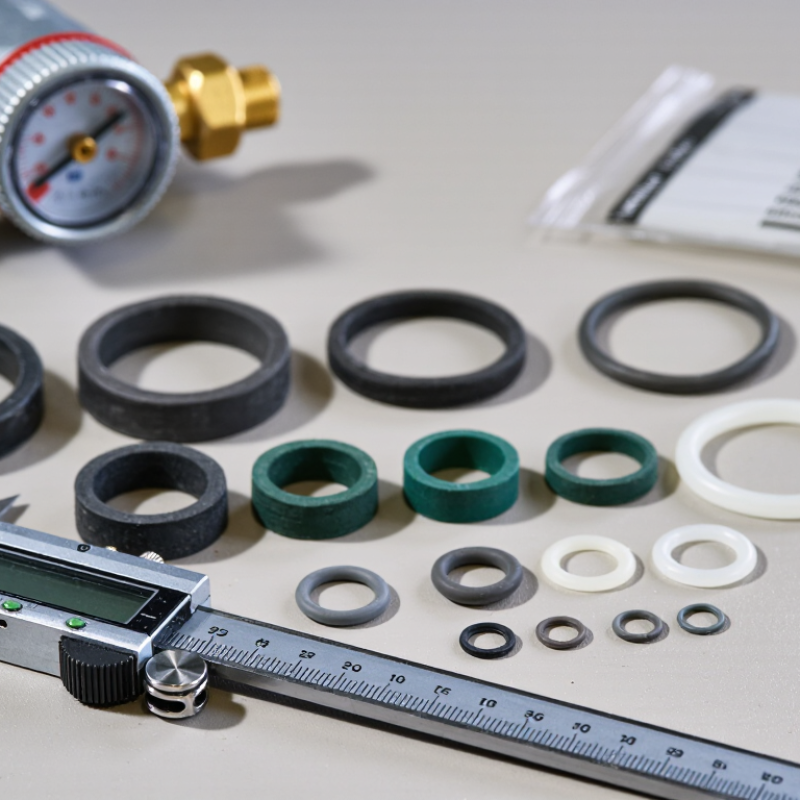
Experienced manufacturers usually offer materials such as NBR, FKM, EPDM, or silicone, depending on the application. They should explain why one compound suits a specific gas environment. Clear drawings, hardness data, dimensional tolerances, and batch records are important evidence. Ask for production samples before approving large quantities. A sample should fit smoothly, without twisting, cutting, or excessive compression.

Testing matters.

Reliable suppliers can describe inspection procedures, including visual checks, dimensional measurement, hardness testing, and leakage evaluation. Certifications may support credibility, but certificates alone do not prove consistent production. Factory audits, technical communication, and traceability provide stronger confidence. Request recent test reports, not only old documents.

The “best” supplier is not always the cheapest. It may be the company that responds accurately, identifies design risks, and maintains stable quality over repeated orders. Some suppliers appear professional but provide vague answers. That should encourage careful review. Packaging also deserves attention; clean bags, batch labels, and protected storage can prevent contamination or deformation before installation.

This guide examines how to compare Chinese Gas Regulator O Ring suppliers through experience, engineering knowledge, documented quality control, and practical customer support. The evaluation is not perfect, because every regulator design has different requirements. Still, a disciplined comparison can reduce avoidable failures and support safer, more reliable sourcing decisions.

China Best Gas Regulator O Ring Supplier?

What Is a Gas Regulator O-Ring and Why Does It Matter?

China Best Gas Regulator O Ring Supplier?

What Is a Gas Regulator O-Ring and Why Does It Matter?

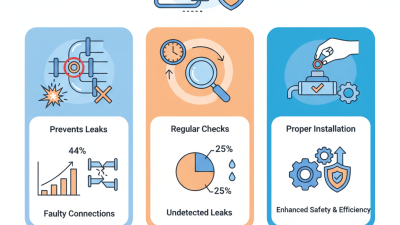
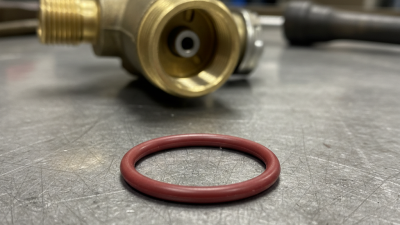
A gas regulator O-ring is a flexible sealing ring inside a regulator connection. It fills tiny gaps between metal surfaces. This prevents gas from escaping during normal operation. Small ring, serious duty. Its performance depends on material, size, hardness, temperature, and pressure. A seal that looks correct may still swell, crack, or flatten in service. That is why material compatibility deserves careful attention.

In practical inspections, I check the O-ring under bright light before installation. Scratches, cuts, dust, and uneven edges can create a leak path. The groove must also be clean and free from sharp damage. A dry seal may twist during assembly. Excessive lubricant can attract particles or affect compatibility. Follow the regulator maker’s installation guidance. Do not guess.

Selecting a reliable supplier in China requires more than comparing prices. Ask for dimensional records, material information, batch traceability, and consistent inspection procedures. Samples should be tested under realistic temperature and pressure conditions. I have learned that a perfect-looking sample proves very little. Production consistency matters more. It is also wise to review packaging, storage control, and replacement support. These details may seem minor, yet they influence whether the O-ring remains flexible after months in storage. A supplier should communicate limitations clearly, including applications they cannot safely support.

China Best Gas Regulator O-Ring Supplier? What Is a Gas Regulator O-Ring and Why Does It Matter?

A gas regulator O-ring is a circular elastomer seal that prevents gas leakage between mating components. Material selection matters because temperature, gas compatibility, pressure, and compression can affect sealing reliability.

How to interpret the chart: NBR is widely used for many petroleum-based gases and offers a practical balance of sealing performance and cost. EPDM generally performs well with hot water, steam, and selected polar media but is unsuitable for many mineral oils. FKM provides strong high-temperature and chemical resistance, while silicone maintains flexibility across a broad temperature range. Actual performance depends on compound formulation, gas composition, pressure, surface finish, and installation conditions.

Values shown are representative industry ranges for common elastomer compounds, not universal ratings. Always verify the specific O-ring compound against the regulator manufacturer’s operating requirements and applicable gas-safety standards.

Which Materials Are Best for Gas Regulator O-Rings?

Which Materials Are Best for Gas Regulator O-Rings?

Selecting a gas regulator O-ring starts with the gas, temperature, and pressure. Nitrile rubber is widely used for many fuel-gas applications. It offers good sealing, abrasion resistance, and reasonable cost. However, its performance can decline in high heat or ozone-rich environments. Fit matters. A damaged groove can defeat even excellent material.

Fluorocarbon rubber suits applications requiring stronger heat and chemical resistance. It performs well with many hydrocarbon-based gases, but low-temperature flexibility may be limited. Silicone remains flexible in cold conditions, yet it can allow greater gas permeation.

Ethylene propylene rubber handles weather and aging effectively, but it is often unsuitable for petroleum-based gases. Material compatibility must be verified, not guessed.

In practical inspections, technicians should check compression, surface finish, and swelling after service. A ring that looks acceptable may have hardened internally. Small cracks can appear near the sealing edge. Pressure cycling also matters. Some materials seal during assembly but relax after repeated temperature changes. PTFE can reduce friction and chemical exposure, although it needs careful design because it has less elastic recovery. Standards, gas composition, and regulator design should guide the final choice. Testing one sample is wise. Real service conditions can expose assumptions.

How to Evaluate Chinese O-Ring Suppliers for Gas Regulators

Evaluating Chinese O-ring suppliers for gas regulators requires more than comparing prices. Start with material compatibility. Ask whether the compound suits the intended gas, pressure, temperature, and sealing environment. Request material data, hardness readings, compression-set results, and batch records. A supplier should explain these figures clearly, not hide behind general claims.

Check production details closely. Inspect molding equipment, trimming methods, cleanliness controls, and storage conditions. O-rings can fail after exposure to heat, ozone, oil, or poor packaging. Ask for samples from normal production, not specially selected pieces. Measure diameter, cross-section, flash, surface marks, and elasticity. Independent testing can confirm important results. It costs more, but one failed seal costs more.

Traceability matters. Each batch should connect to raw materials, inspection records, and shipment details. Reliable suppliers normally provide a controlled drawing and accept reasonable quality agreements. Video audits help, although they cannot replace physical inspection. Communication is another practical test. Do engineers answer technical questions, or only discuss discounts? Some suppliers respond quickly but provide incomplete evidence. That is a warning.

I would also test long-term cooperation carefully. Begin with a small order and review consistency across several batches. A polished catalogue is not proof of manufacturing control. My own evaluation would remain cautious, because even a capable supplier can overlook a process change. Ask how they handle nonconforming parts, corrective action, and customer feedback. Their response often reveals more than their sales presentation.

What Quality Standards Should a Reliable Supplier Meet?

China Best Gas Regulator O Ring Supplier?

A reliable supplier should control every stage, from compound selection to final packing. For gas regulator O rings, material compatibility is critical. The rubber must resist pressure, temperature changes, and the gas medium. Ask for compound specifications, batch numbers, and traceability records. ISO 9001-based quality systems are useful, but certification alone proves little.

The supplier should measure inner diameter, cross-section, hardness, and surface condition. Clear tolerance data matters. Each production batch should include dimensional checks and leakage testing. Compression set and aging tests can reveal performance loss after long service. Request test reports with methods, equipment details, and approval signatures. Vague documents deserve careful questions.

Inspect the factory if possible. Watch how workers store seals, prevent dust, and separate rejected parts. Good packaging should protect O rings from heat, sunlight, ozone, and deformation. Sample testing by an independent laboratory adds confidence. Still, no supplier is perfect. A recent audit may uncover incomplete records or inconsistent sampling. That is not always a failure, but the supplier should explain the cause and show corrective action. Technical communication also matters when drawings change or a material substitute is proposed. Reliable partners respond with evidence, not promises.

China Best Gas Regulator O Ring Supplier? - What Quality Standards Should a Reliable Supplier Meet?
Quality Dimension Recommended Standard or Reference What a Reliable Supplier Should Control Typical Verification Data or Evidence
Dimensional Accuracy ISO 3601-1 for O-ring dimensions; AS568 for inch-size designations where applicable
  • Correct inside diameter, cross-section, and tolerances
  • Controlled mold dimensions and cavity wear
  • Clear separation of metric and inch size references
Inspection records using calibrated optical measuring equipment, gauges, or coordinate measuring systems; dimensional results should be traceable to the applicable drawing and standard.
Surface Quality ISO 3601-3 acceptance criteria for surface imperfections No critical defects such as cuts, cracks, blisters, open flow marks, excessive flash, or foreign particles in the sealing area. 100% visual inspection or validated automated inspection, documented defect limits, approved reference samples, and lot-based inspection records.
Material Identification ASTM D2000 for rubber classification and designation; customer material specification Material grade, polymer type, hardness, cure system, and compound formulation must be identified and controlled. Substituting a similar-looking elastomer should not be permitted without written approval. Compound identification, batch number, material certificate, supplier traceability, and laboratory test results linked to the production lot.
Gas Compatibility EN 549 for elastomeric materials used in gas appliances and gas equipment; application-specific gas compatibility requirements The compound must be selected for the actual gas, pressure, temperature, additives, and service environment. Compatibility must be assessed for natural gas, LPG, biogas, or other specified media rather than assumed from polymer name alone. Documented compatibility evaluation, immersion or aging test results, volume-change data, hardness change, tensile-property retention, and written application limitations.
Hardness Control ASTM D2240 or ISO 48-4, as specified by the approved test method Rubber hardness must remain within the agreed tolerance, commonly specified in Shore A units. The test method, conditioning time, sample location, and tolerance must be consistent. Batch test report showing nominal hardness, actual result, test method, instrument identification, calibration status, and acceptance range.
Tensile and Elongation Properties ISO 37 or ASTM D412 Tensile strength and elongation at break should meet the compound specification before use and after relevant aging tests. Laboratory report containing tensile strength, elongation at break, specimen type, conditioning details, test speed, and pre-aging/post-aging comparison.
Compression Set ISO 815-1 or ASTM D395 The compound should retain sufficient sealing force after compression, temperature exposure, and the intended service duration. Lower compression set is generally beneficial, but the required limit depends on the design. Compression-set percentage, test temperature, test duration, specimen dimensions, and acceptance criteria stated on the material or product specification.
Temperature Resistance Application-specific temperature rating; validated aging methods such as ISO 188 or ASTM D573 The supplier should define continuous and intermittent temperature limits for the selected compound. NBR, FKM, EPDM, and other elastomers have different temperature and media limitations. Heat-aging results, hardness change, tensile retention, elongation retention, mass or volume change, and clearly stated operating-temperature range.
Pressure and Extrusion Resistance Product design validation based on the regulator design, pressure class, clearance, and backup-ring arrangement The O-ring must be evaluated against extrusion, nibbling, leakage, and permanent deformation at the maximum working pressure and temperature. Design validation report including pressure-cycle testing, leakage measurement, gland dimensions, clearance, lubrication condition, and failure analysis.
Gas-Tightness Testing Applicable regulator or gas-equipment product standard; test conditions defined by the approved design specification Finished regulator assemblies should be tested for external leakage and, where applicable, internal leakage under specified pressure, temperature, and stabilization conditions. Leak-test method, test medium, pressure, stabilization time, detection sensitivity, acceptance limit, equipment calibration, and tested quantity per lot.
Traceability ISO 9001 quality-management principles and customer-specific traceability requirements Each lot should be traceable to the compound batch, mold or cavity, production date, inspection records, packaging date, and shipping documentation. Lot code printed on packaging, certificate of conformity, batch records, raw-material records, inspection reports, and retained samples where required.
Cleanliness and Packaging Customer cleanliness specification and controlled storage requirements for elastomer seals O-rings should be free from damaging contamination, packed to prevent deformation, and protected from ozone, direct sunlight, excessive heat, moisture, and incompatible chemicals. Packaging specification, storage-condition records, contamination-control procedure, FIFO or shelf-life management, and inspection of packaging integrity.
Shelf Life and Storage ISO 2230 guidance for storage of vulcanized rubber products Storage should control temperature, humidity, light, ozone sources, deformation, and contact with oils or solvents. Shelf-life labeling should be based on material and customer requirements. Warehouse records, stock-rotation procedure, shelf-life or revalidation policy, storage-condition monitoring, and date or lot identification.
Production Process Control ISO 9001; validated molding and post-curing process where applicable Control mixing, molding temperature, pressure, curing time, post-curing, trimming, inspection, and nonconforming-product handling. Process-control plans, work instructions, equipment-maintenance records, calibration certificates, first-article approval, and corrective-action reports.
Change Management Documented engineering-change and customer-notification procedure Changes to compound, raw-material source, mold, manufacturing location, process parameters, packaging, or inspection method should be reviewed and communicated before implementation. Change-control records, revised drawings or specifications, validation results, customer approvals, and effective-date control.
Supplier Qualification ISO 9001 certification or equivalent quality-management evidence The supplier should demonstrate a stable quality system, competent testing capability, calibrated equipment, controlled subcontractors, and a documented approach to complaints and corrective actions. Valid certificate where applicable, quality manual or process overview, audit results, sample approval records, complaint-response records, and on-time corrective-action performance.
Technical Documentation Approved product drawing and application specification Documentation should state size, material, hardness, color, tolerance, operating temperature, pressure conditions, gas medium, lubrication requirements, packaging, and inspection criteria. Controlled drawing, material data sheet, certificate of conformity, inspection plan, test report, safety data information for lubricants, and installation guidance.
Selection note: The applicable requirements depend on the gas type, pressure, temperature, regulator construction, sealing geometry, and regional certification requirements. Standards and test limits should be confirmed against the final regulator assembly specification before production approval.

How to Select the Best Supplier for Your Gas Regulator O-Rings

China Best Gas Regulator O Ring Supplier?

How to Select the Best Supplier for Your Gas Regulator O-Rings

Choosing a supplier should begin with service conditions, not a low quotation. Record the gas type, working pressure, temperature range, and fitting dimensions. Ask for compound details, hardness, tolerance, and compression-set data. An O-ring that seals well in air may swell in another gas. Material compatibility matters.

Request samples from the same production compound used for future orders. Measure inner diameter, cross-section, and surface condition with calibrated tools. Check flash, cracks, voids, and uneven edges. A reliable supplier should provide batch identification, inspection records, and clear replacement procedures. Ask how raw materials are traced. Traceability builds confidence.

Production experience also deserves direct verification. Review mold maintenance, curing controls, cleanliness practices, and packing protection. If possible, inspect the facility or use an independent quality audit. Discuss lead times honestly, including tooling and repeat orders. I once treated a perfect sample as proof of stable quality; that was careless. A supplier may pass one inspection and still struggle with consistency. Compare several batches. Keep written specifications. Small details often decide whether a regulator remains tight after months of heat and pressure.