Leave Your Message
-
Phone
-
E-mail
-
Whatsapp

Choosing the right Fluorosilicone O Ring in 2026 requires more than comparing catalog prices. Global buyers must match compound performance with fuel exposure, temperature changes, pressure cycles, and installation conditions. This guide introduces the main Fluorosilicone O Ring types used in aerospace, automotive, chemical, and industrial sealing applications.
Some formulations resist petroleum fuels, lubricants, and aggressive vapors better than standard silicone materials. Others prioritize low-temperature flexibility or improved compression-set resistance. The difference may appear small on a specification sheet. In service, it can determine whether a seal survives one season or several years.
Application details matter.
A fuel-system seal may require a different compound than an outdoor sensor seal. Buyers should review hardness, temperature range, fluid compatibility, dimensional tolerances, and certification records. A dark brown or black ring may look suitable, yet appearance proves little about compound quality. Traceable batch data and independent test reports offer stronger evidence.
This overview compares common Fluorosilicone O Ring profiles, including standard, high-temperature, low-temperature, fuel-resistant, and custom-engineered options. It also explains practical selection points, inspection methods, packaging concerns, and supplier questions. Recommendations should remain application-specific. No single compound fits every global market or operating environment.
That limitation is easy to overlook.
Manufacturers and buyers should verify performance under realistic conditions, such as repeated thermal cycling, oil immersion, pressure changes, and long storage. Testing cannot remove every risk, but it can expose weak assumptions before production begins. The following sections provide a practical framework for evaluating suppliers and selecting reliable fluorosilicone seals in 2026.
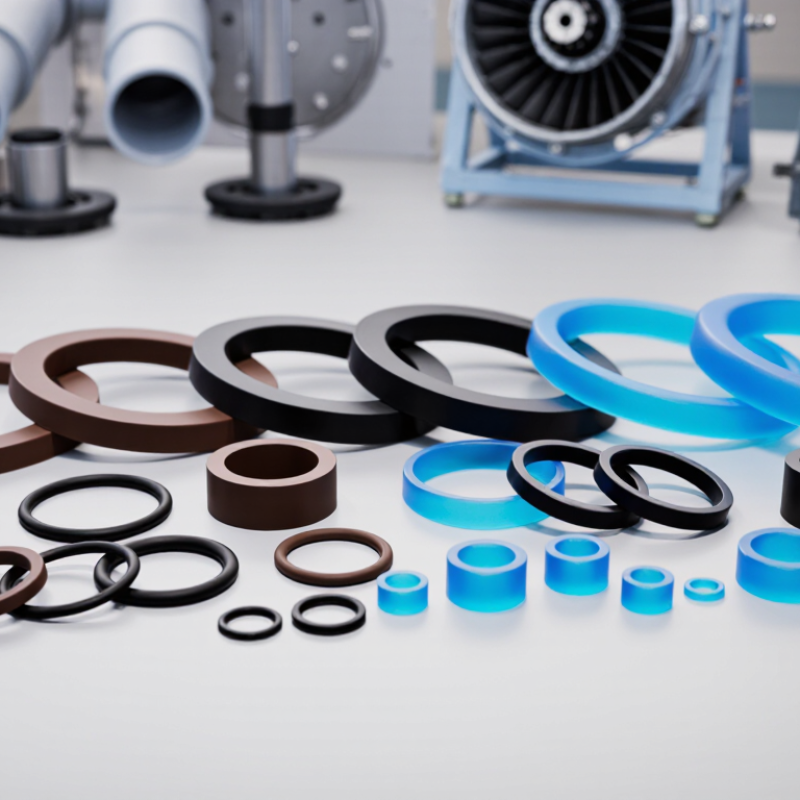
Fluorosilicone O-rings use FVMQ, a silicone backbone modified with fluorinated groups. This chemistry improves resistance to fuels, oils, and many solvents. ASTM D1418 identifies FVMQ as a recognized fluoroelastomer family. Its typical service range is about −60 to 177°C, although the exact limit depends on compound design, pressure, and exposure time.
In practical sealing work, low-temperature flexibility is a major advantage. An O-ring can remain compliant during cold starts, while resisting swelling around hydrocarbon fluids. However, temperature charts can mislead. Continuous heat, compression, and rapid cycling may reduce service life. ISO 3601 provides dimensional guidance for O-rings, while ASTM D2000 supports compound classification and performance testing. These standards improve selection, but they cannot replace application-specific testing.
Tips: Check the real fluid, pressure, groove size, and temperature cycle. Leave enough squeeze for sealing, but avoid excessive compression. Request test data for compression set, tensile strength, and volume change. A small trial often reveals more than a catalog table. One overlooked detail is storage: ISO 2230 recommends controlled temperature, humidity, light, and ozone exposure. FVMQ is capable, not universal. Steam, concentrated acids, and abrasive movement may require another elastomer or a redesigned seal.
| FVMQ O-Ring Type | Typical Hardness | Typical Service Temperature* | Key Material Characteristics | Recommended Fluids and Environments | Common Applications | Important Limitations |
|---|---|---|---|---|---|---|
| General-Purpose FVMQ | 70 Shore A | Approximately −60 to 177°C | Fluorosilicone elastomer with a methyl, vinyl, and fluorinated alkyl silicone backbone; stable across a wide temperature range. | Aviation fuels, gasoline blends, mineral-based oils, diester lubricants, and dry or humid air. | Fuel-system seals, aircraft connectors, instrumentation, and static fluid seals. | Lower resistance to hot air, steam, glycol-based brake fluids, and many polar solvents than some other elastomers. |
| Soft FVMQ O-Ring | 50–60 Shore A | Approximately −60 to 177°C | Lower hardness improves conformity to uneven surfaces and reduces assembly force. | Low-to-moderate pressure fuel and lubricant service where sealing force is limited. | Thin covers, sensor housings, low-clamping-force joints, and delicate assemblies. | More vulnerable to extrusion, nibbling, and rapid deformation under high pressure or large clearances. |
| Hard FVMQ O-Ring | 80–90 Shore A | Approximately −55 to 177°C | Higher resistance to extrusion and mechanical damage than softer grades; requires greater installation force. | Pressurized fuel circuits and applications with controlled gland clearance. | Hydraulic interfaces, aircraft fuel components, valves, and rigid static connections. | May seal poorly on rough surfaces or at low squeeze; installation damage is more likely if lubrication is inadequate. |
| Low-Temperature FVMQ | 60–70 Shore A | Approximately −60 to 150°C | Formulated to retain flexibility and sealing capability during cold starts and cold-soak exposure. | Cold aviation environments, outdoor fuel systems, and low-temperature lubricant service. | Aircraft systems, cold-climate equipment, and exposed instrumentation. | The exact low-temperature limit depends on compound formulation, compression, pressure, and exposure time. |
| High-Temperature FVMQ | 70–80 Shore A | Approximately −55 to 177°C | Uses heat-stabilized compounding for elevated-temperature fuel and lubricant sealing. | Hot fuel, mineral oils, selected synthetic lubricants, and elevated-temperature air exposure. | Engine-adjacent fuel components, hot-zone instrumentation, and aerospace fluid systems. | 177°C should be treated as a compound-specific upper service limit, not a universal rating for every FVMQ formulation. |
| Static FVMQ O-Ring | 70–80 Shore A | Approximately −60 to 177°C | Designed for fixed glands where the seal is compressed but does not reciprocate or rotate. | Fuel, oil, and selected aviation-fluid service in controlled static joints. | Flanges, covers, plugs, pipe fittings, and threaded connections. | Not automatically suitable for dynamic motion; surface finish, squeeze, gland fill, and clearance must be checked. |
| Dynamic FVMQ O-Ring | 70–80 Shore A | Approximately −50 to 150°C | Selected and finished for limited reciprocating or rotary movement; requires controlled friction and lubrication. | Compatible fuels and lubricants under moderate speed and pressure conditions. | Low-speed actuators, shafts, valves, and moving sensor interfaces. | FVMQ generally has lower abrasion resistance than many high-performance dynamic sealing compounds; validate wear and friction by testing. |
| Low-Compression-Set FVMQ | 70–80 Shore A | Approximately −55 to 177°C | Formulated to improve long-term elastic recovery after compression, especially in static applications. | Fuel and oil sealing where long service intervals and thermal cycling are expected. | Long-life aircraft fittings, access panels, and sealed instrumentation. | Compression-set performance varies with test method, temperature, squeeze, cure system, and compound formulation. |
FVMQ Chemistry: Fluorosilicone rubber is a silicone elastomer containing fluorinated side groups. This structure combines silicone-like flexibility at low temperatures with improved resistance to fuels, hydrocarbon oils, and selected solvents compared with standard silicone rubber.
Size Selection: Common O-ring size systems include inch-based aerospace sizes specified by AS568 and metric sizes commonly referenced by ISO 3601 or regional dimensional standards. Select the cross-section and inside diameter from the actual gland dimensions rather than from nominal pipe size.
Engineering Note: Temperature ranges are typical guidance for properly selected compounds and applications. Actual limits depend on fluid concentration, pressure, squeeze, clearance, surface finish, exposure duration, and the specific material specification.