Moken (Xiamen) Industrial Co., Ltd.
Leave Your Message

What Is the Best Fluorosilicone O Ring for 2026?

Choosing the best Fluorosilicone O Ring for 2026 starts with the conditions it must actually survive. Fuel contact, temperature swings, compression, and movement all matter. A seal that looks right on a product page may still fail in a hot, fuel-wet housing. Small details count.

Grand View Research valued the global silicone market at about US$18.5 billion in 2023 and projected 8.8% annual growth through 2030. That figure covers silicone broadly, not fluorosilicone O rings alone. It signals a growing materials market, but it cannot identify the right seal for a specific application. For that, buyers should compare compound data, operating limits, and test conditions. Robert Flitney’s Seals and Sealing Handbook is a useful engineering reference; its practical lesson is to evaluate seals against real service conditions, rather than material labels alone. Fit the compound to the job.

This guide examines what separates a dependable Fluorosilicone O Ring from a costly mismatch: compatibility, temperature range, hardness, dimensions, and supplier documentation. Look closely at the fine print. Published limits can vary by formulation, and performance in one test does not guarantee service life in another. The choice is rarely perfect; it is a balance, and assumptions deserve a second look.
What Is the Best Fluorosilicone O Ring for 2026?

What Is a Fluorosilicone O-Ring and How Is It Made?

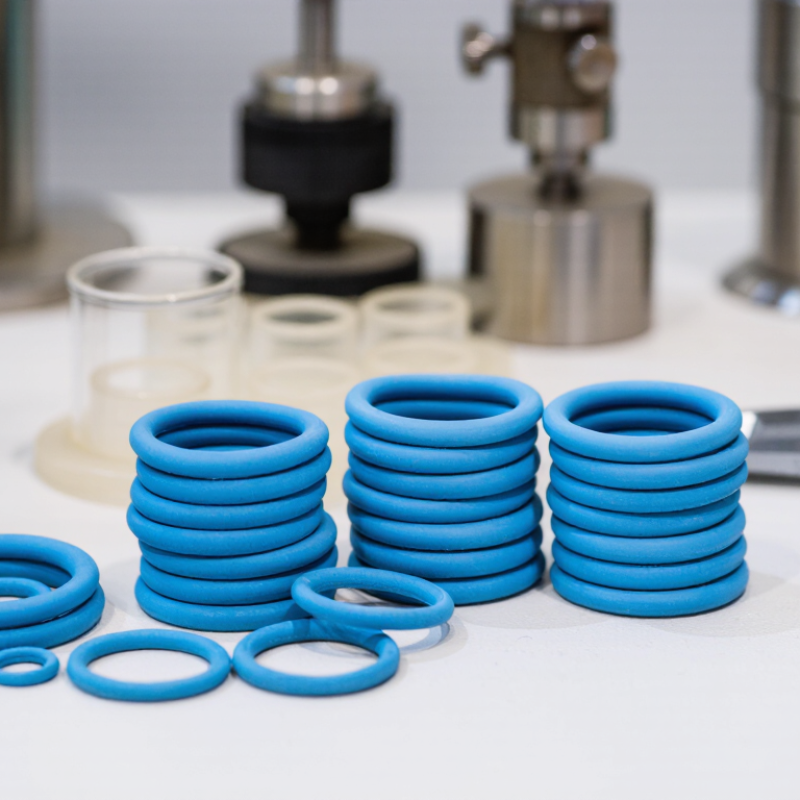
A fluorosilicone O-ring is a molded seal made from an elastomer with a silicone backbone and fluorinated chemical groups. This blend can retain flexibility across a broad temperature range while resisting many fuels and oils better than ordinary silicone. It is not resistant to every chemical. Compatibility depends on the exact fluid, temperature, and exposure time, so checking a material chart is only a starting point.

Manufacturing begins by mixing fluorosilicone gum with reinforcing fillers, pigments, and curing ingredients. The compound is shaped into a preform, then placed in a heated mold. Pressure and heat cure it into a ring, often through compression or injection molding. A post-cure may help remove volatile residues and stabilize performance. Edges are trimmed, and technicians inspect dimensions and surface defects. Small flaws matter.

The best process depends on the ring’s size, tolerances, and service conditions. A seal for a fuel line may need different compound choices than one exposed to hot air or cleaning fluids. Even a well-made ring can fail if squeezed too little, stretched too far, or installed against a rough surface. Real-world testing is valuable. It can reveal problems that a datasheet cannot.

What Is the Best Fluorosilicone O Ring for 2026? - What Is a Fluorosilicone O-Ring and How Is It Made?
Topic Typical information Why it matters when choosing an O-ring
Material definition Fluorosilicone, commonly abbreviated FVMQ, is a silicone elastomer whose polymer includes fluorinated side groups. It combines silicone’s useful flexibility at low temperatures with improved resistance to many fuels, oils, and solvents compared with standard silicone rubber.
Typical temperature capability Many compounds are specified for service in an approximate range of −60°C to +200°C (−76°F to +392°F). Actual limits depend on the formulation, exposure time, and test method. Check the compound’s temperature rating against both minimum start-up temperature and sustained operating temperature; do not assume every FVMQ grade has the same limits.
Common strengths Good low-temperature flexibility and useful resistance to many hydrocarbon fuels, oils, and weathering conditions. Often considered for static or low-to-moderate movement seals where fuel or oil exposure and cold conditions occur together.
Common limitations Abrasion and tear resistance can be limited compared with some other elastomers. Compatibility is not universal; hot water, steam, and certain chemicals may be unsuitable. Confirm compatibility with the exact fluid, concentration, temperature, and exposure duration. Consider another material if wear, extrusion, or aggressive chemical exposure is the main concern.
How it is made Fluorosilicone polymer is compounded with fillers and a suitable curing system, shaped into an O-ring in a mold, cured, and, where specified, post-cured and inspected. Cure conditions and post-cure requirements affect final properties. Ask for the compound specification and manufacturing quality requirements for critical seals.
Hardness and size Available hardness and dimensions vary by compound and supplier. O-rings are specified by inside diameter and cross-section; hardness is commonly reported in Shore A. Match the dimensions to the gland design and choose hardness with pressure, squeeze, assembly method, and extrusion gap in mind.
Potential applications Fuel-handling and oil-exposed sealing applications, including selected aerospace and automotive systems, when the specific compound is qualified for the service conditions. Application approval and fluid-specific compatibility testing are important; a general material description is not a substitute for qualification.
Practical selection rule for 2026 There is no single best fluorosilicone O-ring for every application. Select a documented compound that meets the required fluid compatibility, temperature range, dimensions, hardness, and applicable industry or customer specifications. Request current technical data and, for critical service, verify performance through relevant qualification tests or application-specific testing.

Note: Property ranges are general guidance only. Confirm all limits and compatibility with the specific compound manufacturer’s current technical documentation.
Which Properties Define Fluorosilicone O-Ring Performance?

A fluorosilicone O-ring is judged by more than its temperature rating. Its silicone backbone helps it stay flexible in cold conditions and tolerate heat in many sealing applications. Fluorinated groups improve resistance to fuels and oils compared with ordinary silicone. That difference matters near fuel lines, compact pumps, and housings exposed to oily vapors. Not every fluid. Compatibility still depends on the exact fuel, its additives, temperature, and exposure time.

Compression set is another key property. The ring should recover after being squeezed; a permanent flat spot can lead to leakage. Hardness, cross-section, and gland dimensions all affect sealing pressure. Even a suitable compound may fail if it is compressed too far or nicked during installation. Small details count. Check the specified temperature range and hardness against actual operating conditions, not just a brief peak temperature.

Pressure pulses, movement, and surface finish also shape performance. Fluorosilicone can suit fuel-exposed seals, but it may not be the best choice where abrasion or heavy mechanical loads dominate. A datasheet is a starting point, not a verdict. Compare compatibility information with the specific fluid blend, then test the assembled seal when the application is critical. One overlooked additive can change the result, so selection deserves a little skepticism.

Where Do Fluorosilicone O-Rings Work Best?

Fluorosilicone O-rings work well in applications that combine fuel or oil exposure with cold temperatures. The material can retain flexibility in conditions where some conventional elastomers stiffen. It is commonly considered for fuel-system connections, vent lines, and outdoor equipment exposed to changing weather. Cold flexibility matters.

These seals can be useful in aviation and automotive systems, especially where hydrocarbon fuels contact the seal and temperatures fluctuate. A technician might inspect a small O-ring seated in a metal fuel fitting after a cold overnight period; it still needs to compress evenly when the joint is assembled. That practical detail matters as much as a material data sheet. Fluorosilicone may also suit some oil-exposed applications, but compatibility depends on the exact fluid and operating conditions.

It is not the best choice for every moving seal. Compared with tougher elastomers, fluorosilicone can have lower resistance to tearing, abrasion, or repeated friction. A sharp groove edge or rough installation can shorten service life. Check the seal’s temperature range, fluid compatibility, pressure, and movement before specifying it. Test first. In real equipment, a small design flaw can outweigh the benefits of a carefully chosen compound.

What Is the Best Fluorosilicone O-Ring for 2026? Where Do Fluorosilicone O-Rings Work Best?

Typical continuous temperature ranges for common O-ring elastomers. Fluorosilicone is often chosen for low-temperature flexibility and resistance to fuels and oils.

Ranges are approximate and vary by compound and operating conditions. Fluorosilicone is especially useful in fuel and oil exposure across a wide temperature range, but is generally not the first choice for hot water or steam. Confirm compatibility with the specific fluid and seal design before selection.

How to Choose the Right Fluorosilicone O-Ring for 2026?

What Is the Best Fluorosilicone O Ring for 2026?

How to Choose the Right Fluorosilicone O-Ring for 2026?

Start with the real operating conditions, not a generic material label. Record the fluids, temperature range, pressure, movement, and expected service life. Fluorosilicone can suit applications needing fuel and oil resistance alongside low-temperature flexibility, but performance depends on the specific compound. Not by color alone. Check the compound’s technical data for compatibility with the exact fluid and temperature cycle.

Next, confirm the O-ring dimensions and gland design. Measure the groove and mating parts, then check squeeze, stretch, and clearance against engineering guidance. A ring that looks close may still twist, leak, or wear early. Static seals and moving seals can need different hardness and design choices. Small details matter. Also consider compression set, which can reduce sealing force after prolonged heat and compression.

Ask for traceable specifications and test data, then validate the candidate under representative conditions. A short test with the actual fluid, temperature changes, and assembly method can reveal issues a datasheet cannot. Do not assume one grade will cover every application. I would revisit the choice if field conditions differ from the test setup; real service has a way of exposing that gap.

How to Compare Grades, Sizes, and Supplier Specifications?

What Is the Best Fluorosilicone O Ring for 2026? The answer depends on the fluid, temperature, pressure, and movement in your application. Compare grades by asking suppliers for the exact compound designation, hardness, and documented test results—not just “fuel resistant.” ASTM D2000 provides a system for classifying rubber materials, while ASTM D471 evaluates changes after liquid exposure. Request the actual test fluid, exposure time, and temperature. “Compatible” without conditions is not enough.

Size needs equal care. Check the nominal inside diameter and cross-section against the housing drawing, then confirm tolerances using the applicable ISO 3601 specifications. A ring that looks close can still twist in its groove or leak under compression. For dynamic service, ask about friction and wear testing. For static sealing, request compression-set results under stated conditions, such as ASTM D395. Small details matter.

Supplier comparisons should include batch traceability, inspection methods, and test reports tied to the offered grade. Ask whether results represent production material or a laboratory sample. Also confirm storage guidance and shelf-life documentation. A specification sheet can still leave gaps; it may not describe your exact fluid mixture or temperature cycling. No single grade wins every time. Compare evidence against the real operating profile, and record any assumptions before approving a sample.