China Top Oil Resistant O Rings Manufacturers Suppliers
China’s oil seal industry has developed strong capabilities in molding, compounding, inspection, and customized production. This makes Chinese manufacturers and suppliers important sources for Oil Resistant O Rings used in pumps, engines, hydraulic systems, and industrial valves. However, product quality can vary between factories. Careful evaluation remains necessary.
Reliable suppliers usually provide material specifications, hardness ranges, dimensional reports, and batch traceability. Common elastomers include NBR, FKM, and selected specialty compounds. Each material responds differently to petroleum oils, fuels, heat, pressure, and cleaning chemicals. A professional manufacturer should explain these limits clearly. It should also recommend the correct compound, rather than simply offering the lowest price.
Small details matter.
A dependable factory controls mold accuracy and flashing during production. It checks sealing performance through visual inspection, dimensional measurement, and suitable laboratory testing. ISO-based quality systems can support consistency, but certification alone does not guarantee every shipment will perform perfectly. Buyers should request samples, review technical documents, and confirm packaging before placing large orders.
This guide introduces China’s leading Oil Resistant O Rings manufacturers and suppliers through practical selection criteria. It considers production experience, material expertise, customization ability, quality control, communication, and export reliability. Real-world service can expose weaknesses that catalogs hide. Some suppliers may respond quickly but provide limited technical evidence. Others may offer excellent engineering support but require larger minimum orders. These differences deserve honest attention when selecting a long-term partner.
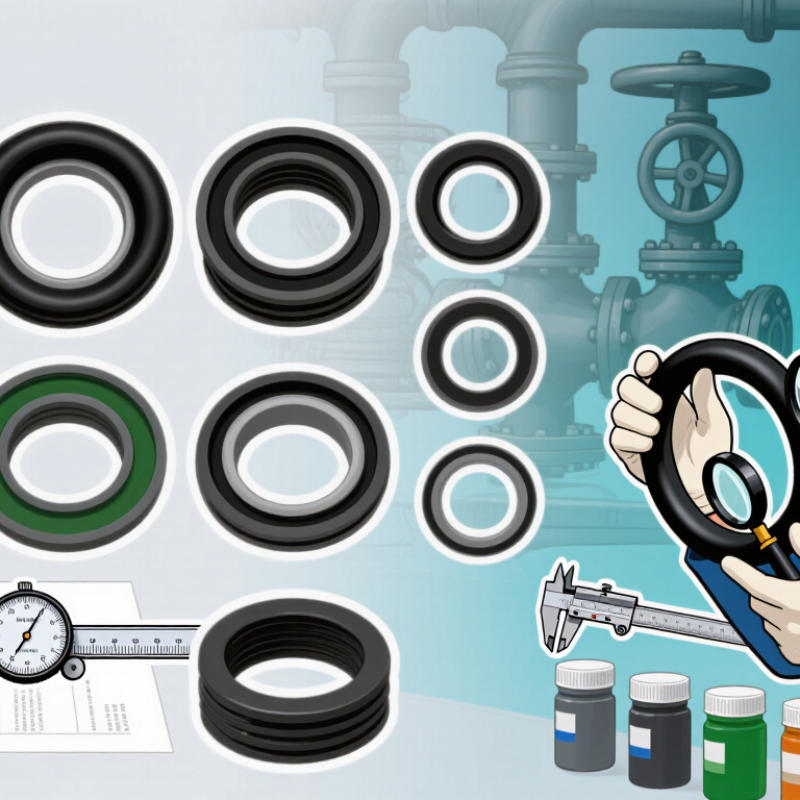
Oil-Resistant O-Rings: Materials, Properties, and Industrial Uses
Oil-resistant O-rings are essential in pumps, hydraulic valves, compressors, and fuel-handling equipment. Their performance depends heavily on material selection. Nitrile rubber suits many petroleum oils, mineral oils, and hydraulic fluids. It offers practical sealing strength and reasonable abrasion resistance. Fluorocarbon rubber handles higher temperatures and aggressive oil exposure more reliably. Hydrogenated nitrile rubber performs well under heat, pressure, and mechanical movement. However, no compound works perfectly in every application.
Tips: Check the fluid, temperature, pressure, and shaft speed before ordering. Measure the groove carefully. A small sizing error can cause leakage. Inspect the ring for cuts, flattening, or surface cracks. Light lubrication can reduce installation damage, but it must be compatible with the rubber. Ask manufacturers or suppliers for compound data, hardness, compression-set results, and batch traceability. Do not choose only by price.
In industrial service, an oil-resistant O-ring must maintain elasticity after repeated compression. It should resist swelling, hardening, and chemical softening. Engineers often examine operating temperature peaks, not just normal readings. A pump may briefly exceed its rated temperature during startup. That detail matters. Field experience shows that poor groove design can defeat even a high-quality seal. Material testing remains necessary, because oil formulations and additives vary. A reliable supplier should explain testing limits clearly and avoid unsupported performance claims. Mistakes still happen, especially when storage conditions are ignored. Keep unused O-rings sealed, cool, and away from direct sunlight.
Key Factors for Choosing Chinese O-Ring Manufacturers and Suppliers
Choosing a Chinese oil-resistant O-ring manufacturer requires more than comparing unit prices. Material compatibility should lead the discussion. Nitrile suits many petroleum oils, while FKM or HNBR may perform better under higher temperatures and aggressive fluids. The correct choice depends on pressure, temperature, fluid additives, and exposure time.
Ask for measurable evidence. A capable supplier should provide material data, hardness records, dimensional reports, and batch traceability. Testing may include oil immersion, compression set, tensile strength, and heat aging. Check whether the laboratory uses calibrated equipment and controlled procedures. A documented quality system, such as ISO 9001, can support reliability, but certificates alone prove little. Request recent inspection samples.
Communication also reveals manufacturing discipline. Confirm mold ownership, minimum order quantities, lead times, packaging, and replacement procedures before production. Clear drawings should specify inside diameter, cross-section, tolerance, compound, and surface requirements. A pre-production sample should be tested in your actual sealing groove when possible.
I once treated a low quotation as a strong advantage. It later hid uncertain tooling costs and slow technical replies. That was a useful warning. Ask how the supplier handles failed batches, design changes, and urgent replenishment. Factory audits, video inspections, and small trial orders can reduce uncertainty. Still, no audit replaces performance data from real operating conditions. Keep that point visible.
China Top Oil-Resistant O-Ring Manufacturers and Suppliers
Typical continuous-service temperature ranges for commonly used oil-resistant O-ring compounds. These ranges are widely published industry guidance; exact limits depend on compound formulation, fluid type, pressure, and application conditions.
When choosing a Chinese O-ring manufacturer or supplier, compare material capability, batch traceability, ISO 3601 dimensional control, compound certification, test equipment, and application-specific validation. Temperature range alone should not replace compatibility testing with the actual oil or fluid.
Manufacturing Standards and Quality Control for Oil-Resistant O-Rings
Oil-resistant O-rings demand more than a suitable rubber compound.
Reliable manufacturers define requirements before production. They review oil type, temperature, pressure, shaft speed, and exposure time. These details guide material selection and dimensional tolerances. Common standards such as ISO 3601 support groove fit, size control, and acceptance criteria. Yet a standard cannot replace application knowledge. A seal may pass inspection and still fail in a hot, contaminated assembly. That risk deserves attention.
Quality control begins with incoming inspection.
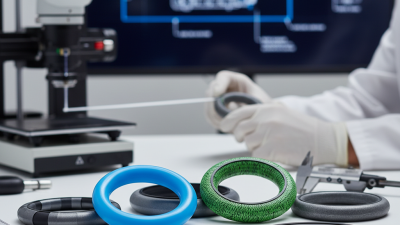
Technicians verify compound identification, hardness, color, and batch traceability. Test specimens are checked for tensile strength, elongation, compression set, and volume change after oil immersion. Aging tests use controlled temperature and defined time periods. Measurements should come from calibrated instruments, with records linked to each production lot. Visual checks also matter. Small flash, cuts, blisters, or uneven surfaces can create leakage paths. Human inspection remains useful, but it is not perfectly consistent.
During molding, teams monitor temperature, pressure, curing time, and cavity condition.
Statistical process control can reveal drift before defects multiply. Finished rings should be sampled for dimensions, hardness, and sealing performance. Packaging must prevent dust, ultraviolet exposure, ozone, and deformation during storage. In practice, factories sometimes overemphasize final inspection. That is a weakness. Prevention is stronger than sorting. Supplier audits, corrective-action reports, and periodic retesting build more dependable evidence. Engineers should also record field failures honestly, even when the result challenges an approved process.
Leading Applications of Oil-Resistant O-Rings in Industrial Equipment
Oil-resistant O-rings are essential in equipment exposed to petroleum oils, lubricants, and hydraulic fluids. They create flexible seals between metal surfaces. In hydraulic cylinders, an O-ring prevents fluid loss around pistons, valves, and threaded connections. A small leak can reduce pressure and leave oil on a workshop floor.
Pump housings and gearboxes use O-rings around shafts, covers, and inspection ports. Compressors also depend on them where lubricated air contacts sealed joints. In engine and transmission assemblies, the seal must tolerate vibration, heat, and repeated pressure changes. Nitrile rubber often suits general petroleum oils, while fluoroelastomer materials can perform better at higher temperatures. Material selection still depends on the exact fluid.
Field maintenance shows that installation damage causes many failures. A twisted ring, sharp groove edge, or dry fitting can create a leak within hours. Use clean tools, confirm the groove dimensions, and apply compatible lubrication before assembly. Check temperature, pressure, chemical exposure, and movement before choosing a replacement. Inspection should look for flattening, cuts, swelling, and hardening.
No seal is perfect.
A useful improvement is recording failure conditions instead of replacing rings blindly. However, maintenance teams sometimes overlook surface finish and compression limits. That mistake deserves more attention. Even a correctly selected O-ring may fail when the housing is scratched or the gland is poorly designed. Reliable suppliers should provide material data, dimensional control, and traceable quality records for industrial applications.
How to Compare Pricing, Customization, and Export Services in China
China Top Oil Resistant O Rings Manufacturers Suppliers
Comparing Chinese oil resistant O-ring suppliers requires more than checking the unit price. Ask whether quotations include tooling, sampling, inspection, packaging, and delivery costs. A supplier quoting $0.02 less may use a different compound or hardness. That difference can affect sealing performance in hydraulic oil. Request material specifications, hardness data, temperature ranges, and recent test records. Clarify the trade term, payment schedule, minimum order, and replacement policy before comparing offers.
Customization shows a manufacturer’s technical strength. Share drawings with groove dimensions, tolerance requirements, operating pressure, and oil type. Experienced engineers should recommend suitable elastomers rather than accept every request without review. Ask about mold ownership, prototype charges, production tolerances, and batch traceability. I have seen buyers focus on color while missing compression set results. That is an expensive oversight. Still, technical discussions can remain imperfect when drawings lack real operating conditions. Revise them after sample testing.
Export service deserves equal attention. Confirm lead times for samples and mass production, export packaging, inspection photos, and shipping documents. A reliable supplier should explain Incoterms clearly and provide consistent communication during production. Check whether cartons protect parts from heat, dust, and deformation during long transit. Ask for a practical contingency plan if tooling or raw materials arrive late. Online replies may sound professional, but factory records and sample results offer stronger evidence. Price is only one measurement.