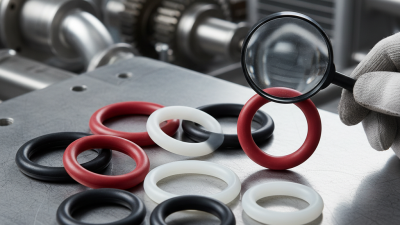
Sourcing Tiny O Rings worldwide is not simply a price exercise. These miniature seals may sit inside medical instruments, sensors, valves, and compact hydraulic assemblies. A ring barely visible on a workbench can still control leakage, pressure stability, and product reliability. That detail matters.
Industry research supports this demand. Grand View Research’s Gaskets and Seals Market report describes steady growth across automotive, aerospace, industrial, and healthcare applications. MarketsandMarkets also identifies material performance, customization, and regional manufacturing capacity as important factors in O-ring procurement. These findings suggest a practical truth: global supply is broad, but consistent quality is not automatic.
Standards provide a useful starting point. ISO 3601 defines key dimensions, tolerances, and designation practices for many O-rings. Parker’s O-Ring Handbook further explains how temperature, pressure, chemical exposure, compression, and surface finish affect sealing performance. Experienced buyers should compare these requirements before requesting quotations. A low unit price can become expensive after leakage testing, sorting, tooling changes, or delayed production.
This guide presents 10 practical tips for sourcing Tiny O Rings worldwide. It examines drawings, elastomer selection, hardness, tolerances, sampling, factory audits, documentation, packaging, logistics, and supplier communication. Some recommendations may appear obvious. They are often missed.
Real sourcing is rarely perfect. A supplier may provide excellent samples but inconsistent batches. A technically correct compound may still fail after storage. Even experienced teams can overlook packaging damage or unclear inspection criteria. Careful verification remains essential. Small components deserve serious engineering attention.

Before a global search, define the tiny O-ring precisely. Record inside diameter, cross-section, tolerance, material, hardness, color, and operating temperature.
Tip 1: Use ISO 3601 dimensions where applicable.
Tip 2: State whether measurements are nominal or maximum.
Tip 3: Add the sealing medium, pressure, and movement type.
A two-millimeter ring still needs engineering discipline.
Material selection deserves evidence. The International Rubber Study Group’s 2024 industry data places global rubber consumption near 31 million tonnes, but volume does not prove suitability.
Tip 4: Specify an elastomer family, not only “rubber.”
Tip 5: Request ASTM D2000 or equivalent material classification.
Tip 6: Check compression set after heat and fluid exposure.
Tip 7: Define hardness tolerance, because tiny sections magnify dimensional errors.
Tip 8: Ask for batch-level certificates and test conditions.
Tip 9: Clarify packaging and cleanliness requirements before requesting prices.
Tip 10: Require samples from the intended production process, not laboratory prototypes.
Small rings can disappear inside mixed bags. I have seen searches fail because buyers compared unit prices before confirming tolerances. That approach feels efficient, but it is not. The 2024 industrial sealing market analyses also identify automotive, medical, and fluid-handling applications as major demand areas, each with different validation expectations. Keep drawings, inspection methods, and acceptance limits together. A supplier should understand the part before quoting it.

Sourcing tiny O rings worldwide requires more than a low quoted price. A reliable supplier should explain material grades, hardness ranges, tolerances, and inspection methods clearly. Ask for production samples, dimensional reports, and traceability records before approving a large order. Photograph the sample beside a calibrated gauge. Small details matter.
Check whether the supplier manufactures the rings or only resells them. When practical, review mixing, molding, trimming, and final inspection through a facility visit or live video call.
Manufacturing capability must match the ring’s working conditions. Discuss temperature, pressure, chemical exposure, compression set, and expected service life. An experienced engineer should recommend suitable elastomer families while explaining trade-offs. A softer compound may seal irregular surfaces better, but it can deform during installation.
Request capability studies for inner diameter, cross-section, and flash limits. Do not accept vague claims. Ask direct questions about tooling ownership, mold maintenance, minimum order quantities, and realistic lead times.
International sourcing adds communication and quality risks. Use controlled drawings, agreed inspection standards, and written change-notification procedures. Confirm packaging that prevents dust, ozone exposure, and compression during transport.
I have seen promising samples fail after storage because packaging was treated as an afterthought. That experience deserves reflection.
Keep an approved sample and compare future lots against it. Independent testing can verify material identity and performance for sensitive applications.
Trust should follow evidence, not polished presentations.
Tip 1: Confirm the medium before requesting prices. Oil, water, fuel, and oxygen need different elastomers.
Tip 2: Compare NBR, EPDM, FKM, and silicone by temperature, swelling, and compression set. ASTM D1418 defines common rubber material names, while ASTM D2000 helps specify performance.
Tip 3: Measure inside diameter, outside diameter, and cross-section with calibrated tools. Tiny errors matter.
Tip 4: Request ISO 3601 dimensions and tolerances, not only a supplier’s drawing.
Tip 5: Ask for batch traceability, inspection records, and material certificates. Certification claims should be checked against the actual shipment.
Tip 6: Compare prices at identical quantities. A low unit price can hide expensive tooling, packaging, testing, or freight.
Tip 7: Record minimum order quantities separately for standard and custom sizes.
Tip 8: Request samples from the production batch, not random warehouse stock.
Tip 9: Compare certifications carefully, including food-contact, drinking-water, or clean-environment requirements. A certificate may cover only one compound.
Tip 10: Check packaging for light, ozone, heat, and humidity protection. ISO 2230 recommends controlled storage practices for rubber products.
Industry market analysis published in 2024 estimates steady global growth in sealing products, driven by automation, mobility, and fluid equipment. Demand is rising, but specifications remain inconsistent across regions.
In my sourcing work, I once accepted a cheaper compound without checking compression set data. The parts looked perfect, then leaked after thermal cycling. That mistake still influences my process.
Ask for test conditions, aging results, and production capacity. Pricing is useful. Evidence is better.
Tiny O rings demand stricter verification than their size suggests. A sample may look perfect, yet fail after heat, pressure, or repeated movement.
Request several samples from different cavities, not one handpicked piece. Measure inner diameter, cross-section, roundness, and hardness with calibrated tools. Record results in a shared inspection sheet.
Define the material and quality standard before comparing quotations. Ask for compound details, temperature limits, compression set data, and test methods.
Certificates should match the actual batch, with traceability from raw material to shipment. Visual checks should identify cuts, flash, bubbles, flattening, and surface contamination.
I once treated a clean sample as proof of stable production. That was too optimistic.
Packaging can protect or ruin precision parts. Specify sealed bags, clear labels, lot numbers, quantity, and moisture control when needed. Avoid loose bulk packing; tiny rings can deform, mix, or disappear in transit.
Request production photos and pre-shipment inspection records. During pilot orders, compare samples from the beginning, middle, and end of production.
Check dimensions again after transport. Consistency matters more than one excellent batch.
If rejection limits are unclear, suppliers may interpret quality differently. Put acceptance criteria in writing, then review them after real assembly testing. Small errors become expensive quickly.
Shipping small O rings still requires serious planning. A box may weigh little, but one missing document can stop delivery. Confirm the HS code, country of origin, material description, quantity, and declared value before dispatch. Ask suppliers to attach the commercial invoice and packing list outside the carton. The World Bank’s Logistics Performance Index 2023 shows that international shipments still face major delays between ports, borders, and final delivery. Tiny parts are not automatically simple.
Customs needs clarity. Provide drawings with inner diameter, cross-section, hardness, temperature range, and tolerance. State whether the material is silicone, EPDM, fluorocarbon, or another compound. Avoid vague terms like “rubber seal.” Check destination rules for chemical declarations, labeling, and product documentation. The OECD’s Trade Facilitation Indicators report estimates that stronger border procedures could reduce global trade costs by about 14.3%. That is meaningful for repeat orders.
Communication should survive time zones and language gaps. Use a shared specification sheet, sample approval record, and written change-control process. A five-minute confirmation can prevent thousands of incorrect pieces. It may not always happen. Build long-term support around batch numbers, inspection reports, shelf-life guidance, and replacement planning. McKinsey reported in 2020 that 93% of supply chain leaders pursued resilience improvements, including multiple sourcing routes. Keep a backup supplier, but do not treat every supplier as interchangeable. Consistent tooling and honest communication matter more than the lowest unit price.