Leave Your Message
-
Phone
-
E-mail
-
Whatsapp

Choosing a high-temperature O-ring supplier is not just a price comparison. Heat, pressure, fluid exposure, and repeated compression can change how a seal performs. This guide introduces China-based manufacturers serving demanding industrial applications and explains what buyers should check before requesting a quote.
High Temp Orings may use materials such as FKM, silicone, or FFKM, but a material name alone cannot confirm suitability. Maximum operating temperature depends on the exact compound, exposure time, contact media, and sealing design. Ask for compound data, temperature limits, test conditions, and application guidance. Check whether the supplier can provide traceable quality documentation and consistent production details. Small details matter.
The manufacturers discussed here should be treated as candidates, not as a universal ranking. A supplier that works well for one pump or oven may not fit another system. Compare manufacturing capabilities, sample availability, lead times, communication, and support for custom sizes. Then confirm performance under your actual operating conditions. A catalogue specification is useful, but it is not the whole story. Even experienced buyers can miss a mismatch between laboratory ratings and real service. That deserves a closer look. Verify critical claims directly with each manufacturer before making a final selection.
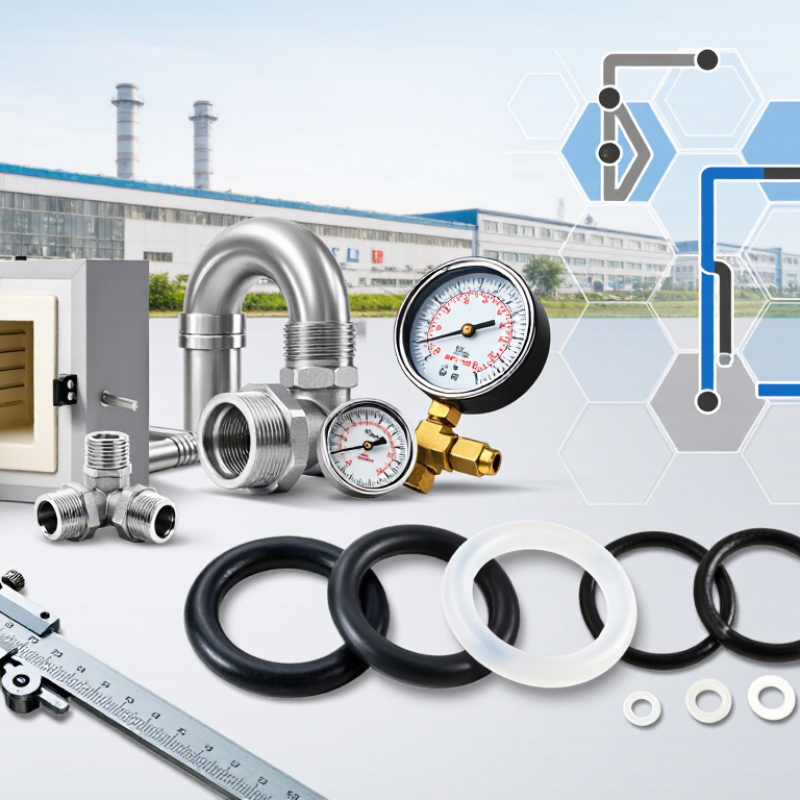
High-Temperature O-Rings: Materials and Service Limits up to 327°C
Some specialized perfluoroelastomer compounds can withstand temperatures approaching 327°C. That figure is not a universal operating guarantee. Continuous exposure, brief peaks, and repeated heat cycles can produce very different results. The exact limit depends on the compound, fluid, pressure, and seal design.
Common FKM compounds generally suit lower temperature ranges than many perfluoroelastomers, while silicone may offer flexibility but has different chemical limits. At high heat, elastomers can harden, swell, or lose sealing force through compression set. A seal that looks intact may still leak after cooling. Check the supplier’s compound-specific data, including media compatibility and exposure duration; then test the seal in conditions close to the actual assembly. Small details matter, such as a sharp gland edge or excessive squeeze.
Tips: Confirm whether 327°C is continuous or intermittent service. Ask for test conditions and batch traceability. A simple heat-soak test helps, but it cannot replace validation under real pressure and fluid exposure.
Material comparison for high-temperature O-rings. Temperature capability depends on the specific compound, exposure time, pressure, compression, and operating medium.
| Material family | Typical continuous service range | Possible short-term peak | Typical strengths | Important limitations |
|---|---|---|---|---|
| Standard FKM (fluorocarbon rubber) | Approximately −20°C to 200°C | About 220°C for some compounds | Good heat, oil, fuel, and many chemical resistance properties. | Compatibility varies by formulation; generally unsuitable for hot water, steam, and some polar fluids. |
| High-temperature FKM | Approximately −20°C to 230°C | Up to about 250°C for limited exposure in selected compounds | Improved resistance to heat aging compared with many standard FKM compounds. | Not all FKM compounds reach this range; confirm fluid compatibility and compression-set performance. |
| General-purpose FFKM (perfluoroelastomer) | Approximately −15°C to 260°C | Grade-dependent; some compounds tolerate brief excursions above their continuous rating | Very broad chemical resistance and high-temperature capability. | High cost; low-temperature flexibility and properties vary considerably among compounds. |
| Specialty ultra-high-temperature FFKM | Grade-dependent; some formulations are rated for service near 300°C | Up to 327°C for certain grades and defined short-duration conditions | Designed for demanding thermal and chemical environments. | 327°C is not a universal continuous-use rating. Verify the exact grade, media, pressure, and exposure duration with its technical data. |
| FEPM (tetrafluoroethylene-propylene rubber) | Approximately −10°C to 230°C | About 250°C for some compounds | Useful resistance to hot amines, alkaline media, steam, and certain aggressive chemicals. | Limited resistance to some hydrocarbons and low-temperature flexibility can be weaker than other elastomers. |
| VMQ (silicone rubber) | Approximately −50°C to 200°C | About 230°C for selected compounds | Broad temperature flexibility and good resistance to weathering and ozone. | Usually has lower tear and abrasion strength; generally unsuitable for many fuels and oils. |
| FVMQ (fluorosilicone rubber) | Approximately −50°C to 175°C | About 200°C for selected compounds | Combines low-temperature flexibility with better fuel and oil resistance than silicone. | Mechanical strength and wear resistance are often limited compared with FKM. |
| EPDM (ethylene propylene diene rubber) | Approximately −40°C to 150°C | About 175°C for some compounds | Strong resistance to hot water, steam, weathering, and many polar chemicals. | Generally incompatible with petroleum oils, fuels, and many hydrocarbon fluids. |
| HNBR (hydrogenated nitrile rubber) | Approximately −30°C to 150°C | About 165°C for some compounds | Good oil resistance with improved heat, abrasion, and mechanical performance over standard NBR. | Temperature capability and chemical compatibility depend on acrylonitrile content and compound formulation. |
| ACM (polyacrylate rubber) | Approximately −20°C to 150°C | About 175°C for selected compounds | Often used for hot engine oils and applications requiring resistance to oil oxidation. | Generally poor resistance to water, steam, and many low-temperature conditions. |
Selection note: These are approximate industry-typical ranges, not guaranteed limits. Check the compound manufacturer’s data for the actual continuous and peak ratings, and validate performance in the intended fluid, pressure, and gland design.