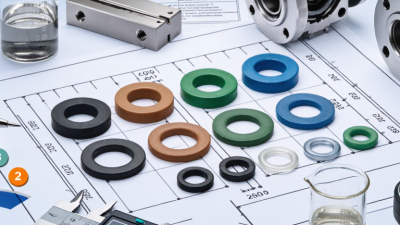
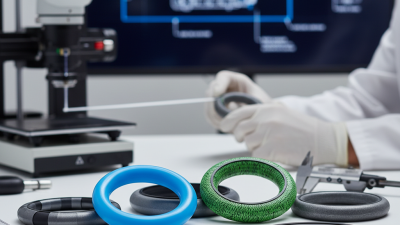
Top Small O Rings for Sale Which Type Is Best?
Small O Rings are easy to overlook until a fitting leaks, a pump loses pressure, or a seal fails during a routine service. Tiny parts. Real consequences. Choosing the best type is not just about matching a diameter. Material, hardness, temperature, pressure, fluid exposure, and installation space all affect performance. Grand View Research’s O-Ring Market Size, Share & Trends Analysis Report estimated the global market at USD 13.08 billion in 2023 and projected a 5.4% compound annual growth rate from 2024 to 2030. That scale reflects how widely these seals are used, but market growth alone cannot tell you which ring suits your equipment.
For practical selection guidance, Parker Hannifin’s O-Ring Handbook covers material compatibility, groove design, and common failure causes. These details matter even for a small static seal: a ring that swells in oil, hardens with heat, or twists during fitting may not hold pressure reliably. A compact size does not make the application simple. And specifications can be incomplete.
This guide compares common Small O Rings by material and application, including nitrile, silicone, and fluorocarbon options. It will also explain how to check dimensions, operating conditions, and installation limits before buying. The best choice depends on the job, not on a universal ranking. Even a careful recommendation has limits when the fluid, temperature range, or groove dimensions are unknown. Use the product specification and equipment guidance to verify fit before ordering.
What Small O-Rings Are and Where They Are Used
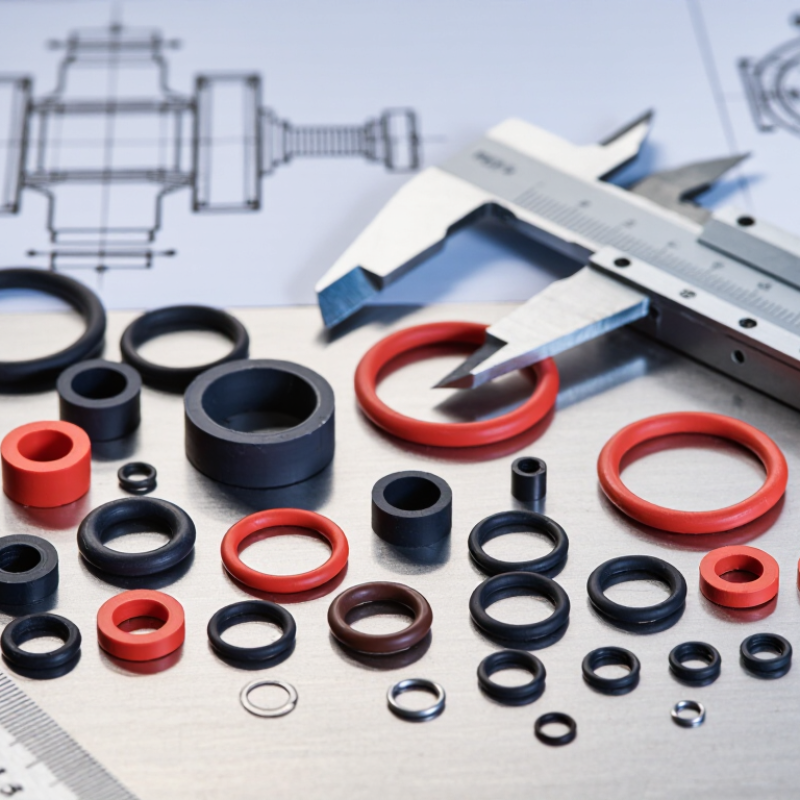
Small O-rings are circular elastomer seals with a round cross-section. In a properly sized groove, they compress against nearby surfaces to help prevent air or fluid from escaping. “Small” refers to their dimensions, not a separate seal design. Inner diameter and cross-section both matter. Tiny differences matter.
These rings are used in compact valves, pump heads, water connectors, laboratory instruments, appliances, and vehicle components. A small O-ring may seal a stationary fitting or a moving shaft. Static joints hold parts that remain still. Dynamic seals encounter sliding or rotating motion, which can increase friction and wear. Not every ring suits both jobs.
Selection depends on groove dimensions, operating temperature, pressure, movement, and the fluid or gas involved. Nitrile is commonly used with many oils, while silicone can suit a broad temperature range; neither is ideal for every application. Check material compatibility data. Measuring an old ring can help, but stretching or flattening may distort its size. It is tempting to choose one that looks close enough. That shortcut can lead to leaks, so verify the dimensions and material before installation.
Top Small O-Rings for Sale: Which Type Is Best?
Small O-rings are torus-shaped seals used to prevent fluid or gas leakage between two mating surfaces. The best material depends on temperature, chemicals, pressure, and the application environment.
Typical continuous service temperature upper limit: Fluoroelastomer and silicone O-rings perform well at high temperatures, while PTFE provides the widest temperature range and excellent chemical resistance. Nitrile is commonly selected for general-purpose oil and hydraulic sealing, and EPDM is suitable for hot water, steam, and weather-resistant applications.
- Nitrile rubber: hydraulic systems, pneumatic equipment, oils, and fuels
- Fluoroelastomer: automotive, fuel, chemical, and high-temperature sealing
- EPDM: water, steam, outdoor equipment, and brake-fluid systems
- Silicone: food-contact equipment, medical devices, and wide-temperature applications
- PTFE: aggressive chemicals, high-temperature equipment, and low-friction seals
How O-Ring Materials Differ in Performance
When comparing small O rings for sale, material matters more than appearance. A ring may look identical to another yet swell, crack, or lose its seal in service. Nitrile rubber is often chosen for contact with oils and fuels. It is practical for many mechanical fittings, but heat and outdoor exposure can shorten its life. EPDM handles water, weather, and many cleaning solutions well. It is generally a poor match for petroleum oils.
Fluorocarbon rubber tolerates higher temperatures and many chemicals, though compatibility still depends on the exact fluid and operating conditions. Silicone stays flexible across a wide temperature range. It can be less suitable where sharp edges, abrasion, or heavy movement are present. Small parts are easy to overlook. A slightly wrong size or squeezed installation can damage even a suitable material. Check the fluid, temperature range, pressure, and groove dimensions before choosing. Material charts help, but mixtures and real operating cycles can behave differently. That part deserves a second look.
How Size, Cross-Section, and Hardness Affect Fit
Choosing a small O-ring starts with the groove, not just the ring’s listed size. Measure the inside diameter and cross-section with a caliper, using light pressure so the rubber does not flatten. Measure the groove as well. An old ring may be swollen, compressed, or permanently stretched, so it can give a misleading reading. Small differences matter.
Cross-section controls how much the seal compresses when installed. A ring that is too thin may not contact both surfaces consistently. One that is too thick can resist assembly, twist, or wear against the groove. Check the seal’s intended squeeze against the equipment specifications; there is no single compression value for every design. A careful fit beats guesswork.
Hardness, commonly given as Shore A, affects how the ring deforms. A softer compound may conform well to minor surface irregularities, but can be more vulnerable to damage or extrusion in a wide clearance. A harder ring may resist extrusion, yet require better surface finish and tighter dimensional control. Match hardness to pressure, movement, temperature, and groove clearance. Test the assembled seal if practical. Even a neat measurement can miss a rough edge.
Top Small O Rings for Sale Which Type Is Best? - How Size, Cross-Section, and Hardness Affect Fit
| Size Reference |
Inside Diameter (ID) |
Cross-Section (CS) |
Typical Hardness Options |
Fit Considerations |
Common Selection Use |
| AS568-006 |
0.114 in (2.90 mm) |
0.070 in (1.78 mm) |
70A is common; 50A or 90A may be available depending on material |
Its small ID suits compact glands. Confirm the installed stretch and gland dimensions; excessive stretch can reduce the ring’s cross-section. |
Small static sealing glands where the groove is designed for this nominal size. |
| AS568-007 |
0.145 in (3.68 mm) |
0.070 in (1.78 mm) |
70A is a general-purpose choice; softer compounds can conform more easily |
Check that the ID fits the mating part without excessive stretching or twisting during installation. |
Compact equipment and small-bore static applications with a matching gland. |
| AS568-008 |
0.176 in (4.47 mm) |
0.070 in (1.78 mm) |
70A is widely used; 90A can help resist extrusion in suitable designs |
The same cross-section as nearby dash sizes does not make them interchangeable: the ID must also match the groove and mating parts. |
Small static seals in fittings, housings, and instrument assemblies. |
| AS568-009 |
0.208 in (5.28 mm) |
0.070 in (1.78 mm) |
50A may accommodate lower squeeze; 70A is a common starting point |
Choose hardness based on the gland, pressure, movement, and material. Hardness alone does not establish a suitable seal. |
Compact sealing applications where the specified groove matches the AS568 size. |
| AS568-010 |
0.239 in (6.07 mm) |
0.070 in (1.78 mm) |
70A is common for general service; 90A may be considered for extrusion resistance |
For dynamic service, also consider friction, lubrication, speed, and the surface finish of the mating parts. |
Small-bore assemblies with a properly designed static or dynamic gland. |
| AS568-011 |
0.301 in (7.65 mm) |
0.070 in (1.78 mm) |
70A is a common general-purpose hardness; other values depend on the compound |
Verify squeeze and gland fill using the applicable design guidance; overfilling or excessive squeeze can impair performance. |
Small fittings and housings designed around this nominal dash size. |
How to choose: Match the O-ring’s inside diameter and cross-section to the gland rather than selecting by appearance alone. A 70A hardness is a common starting point, not a universal answer; softer rings can conform more readily, while harder rings may better resist extrusion in an appropriately designed seal. Confirm material compatibility with the fluid, temperature limits, pressure, and whether the seal is static or dynamic. AS568 dimensions shown are nominal; verify applicable tolerances and design requirements before ordering.
Which Small O-Ring Types Suit Common Applications
Top Small O Rings for Sale: Which Type Is Best?
Which Small O-Ring Types Suit Common Applications
Choosing a small O-ring starts with the fluid, temperature, pressure, and groove dimensions. Nitrile rubber (NBR) is a common choice for mineral-oil seals in pumps and compact hydraulic fittings. EPDM often suits hot water and outdoor exposure, while fluorocarbon rubber handles many oils and fuels at elevated temperatures. Silicone stays flexible in cold conditions, but it is not a universal choice for abrasion or high-pressure service. Fit matters.
For initial screening, engineering selection tables commonly place NBR near −30 to 120°C, EPDM near −50 to 150°C, and fluorocarbon near −20 to 200°C. These are approximate ranges, not guarantees; compound, fluid, and compression can shift performance. ISO 3601-1:2012 specifies O-ring dimensions, and ASTM D2000-18 classifies elastomer requirements such as heat resistance and hardness. Use them to narrow options, then check the supplier’s compound data and test the seal in the actual fluid. Small parts can be unforgiving.
For a dripping tap, an EPDM ring may be more suitable than NBR when hot water is involved. A miniature oil-line seal may favor NBR or fluorocarbon, depending on temperature and fluid chemistry. Measure the groove with care: a ring that looks close can still twist, pinch, or leak. I would not choose by material name alone. The less glamorous detail is often the decisive one.
How to Select and Verify O-Rings Before Buying
Top Small O Rings for Sale Which Type Is Best?
How to Select and Verify O-Rings Before Buying
Choosing a small O-ring starts with the job it must do, not its price. Identify the groove size, operating temperature, pressure, and fluids it will contact. A ring that fits loosely may leak; one squeezed too tightly can deform or wear early. Small parts leave little room for guesswork. Measure the inside diameter and cross-section carefully, and compare them with the equipment drawing. Avoid pulling or stretching the ring during measurement. That can distort the result.
Material matters just as much. Elastomers respond differently to oils, water, fuels, heat, and cleaning agents, so confirm compatibility with reliable material data. Check the hardness and temperature range against the actual operating conditions, not just a short test. For an uncertain application, request a sample before ordering a large quantity. It is a practical step. I would not treat a generic material description as proof of suitability; details can be incomplete.
Before buying, ask for a dimensional specification, material identification, and batch information. Inspect a sample under good light for cuts, flat spots, cracks, or uneven molding. Compare several pieces, since variation can matter in tiny seals. If dimensions are critical, use an appropriate measuring method that will not compress the elastomer. Keep the packaging and product records for later checks. It may feel overly careful for a small ring, but replacing a failed seal can take more time than verifying it.