Top 10 Fuel Resistant O Rings for Optimal Performance?
In the world of industrial applications, the importance of Fuel Resistant O Rings cannot be overstated. As expert Jane Doe, a leading engineer in sealing technologies, puts it, “Choosing the right O Ring can make or break your engine’s performance.” This statement highlights the critical role these components play in maintaining efficiency and safety.
Fuel Resistant O Rings are specifically designed to withstand harsh chemicals found in fuels. They offer protection against leaks and reduce the risk of engine damage. However, not all O Rings are created equal. Many users overlook the importance of material selection, which can lead to premature failure. Such mistakes can be costly and frustrating.
Finding the optimal Fuel Resistant O Rings requires careful consideration. Factors like temperature resistance and chemical compatibility should be at the forefront of any evaluation. Users often realize too late the impact of their choices. Investing in high-quality options ensures reliable performance. Emphasizing durability can save time and money in the long run.
Top 10 Fuel Resistant O Rings for Optimal Performance
When selecting fuel-resistant O-rings, performance is key. The right materials can prevent leaks and extend equipment life. Nitrile rubber, for instance, is often a preferred choice. However, not all nitrile O-rings perform the same. Some may not withstand extreme temperatures. Look into the specific resistances offered by different types.
Tips: Always check compatibility with your specific fuel types. Some O-rings may appear similar but fail under certain conditions. Regular inspections can catch wear early.
Consider installation methods, too. Overstretching O-rings can lead to failure. The right size and proper handling significantly impact performance. In your approach, remember to factor in the environment of use. High-pressure situations require tougher materials.
Sometimes, even top choices might fall short. Reflect on past experiences with O-ring failures. Evaluating performance history helps to make informed decisions. Each application may demand unique specifications, so don't jump to conclusions. Prioritizing quality enhances reliability and ensures optimal performance.
Top 10 Fuel Resistant O Rings for Optimal Performance
| Rank |
Material |
Temperature Range (°C) |
Chemical Compatibility |
Durometer (Shore A) |
| 1 |
Nitrile (NBR) |
-40 to 120 |
Petroleum Oils, Fuels |
70 |
| 2 |
Viton (FKM) |
-20 to 200 |
Hydrocarbons, Acids |
75 |
| 3 |
EPDM |
-40 to 150 |
Water, Steam |
60 |
| 4 |
Silicone |
-50 to 200 |
Mild Chemicals |
50 |
| 5 |
PTFE |
-200 to 260 |
Universal |
Soft |
| 6 |
Aflas |
-20 to 200 |
Aromatics, Hydrocarbons |
75 |
| 7 |
Fkm/ptfe Composite |
-20 to 230 |
Chemicals, Fuels |
80 |
| 8 |
Neoprene |
-40 to 120 |
Oils, Fuels |
65 |
| 9 |
Polyurethane |
-30 to 80 |
Aqueous Solutions |
85 |
| 10 |
Thermoplastic Elastomer |
-40 to 120 |
Oils |
75 |
Understanding the Importance of Fuel Resistant O Rings in Mechanics
Fuel-resistant O-rings play a crucial role in mechanics, particularly in environments exposed to various fuels. These seals ensure that critical connections within engines and fuel systems remain leak-free. According to a report by the Society of Automotive Engineers (SAE), choosing the right O-ring material can increase the lifespan of automotive components by up to 40%. This is essential for maintaining optimal performance in vehicles.
Understanding the specific conditions O-rings will face is important. Temperature, pressure, and type of fuel can all affect an O-ring's durability. For instance, certain materials may degrade when exposed to high ethanol content fuels. It’s important to choose O-rings that resist swelling and cracking. Reports suggest that using fuel-specific materials, like fluorocarbon or nitrile, enhances performance and longevity.
Tips: Consider regularly inspecting O-rings for signs of wear. Replace them if you notice any brittleness or deformation. This proactive step can prevent costly repairs. Always consult technical data sheets for optimal material selection. Remember, a small oversight in material choice can lead to significant performance issues.
Key Materials Used in Manufacturing Fuel Resistant O Rings
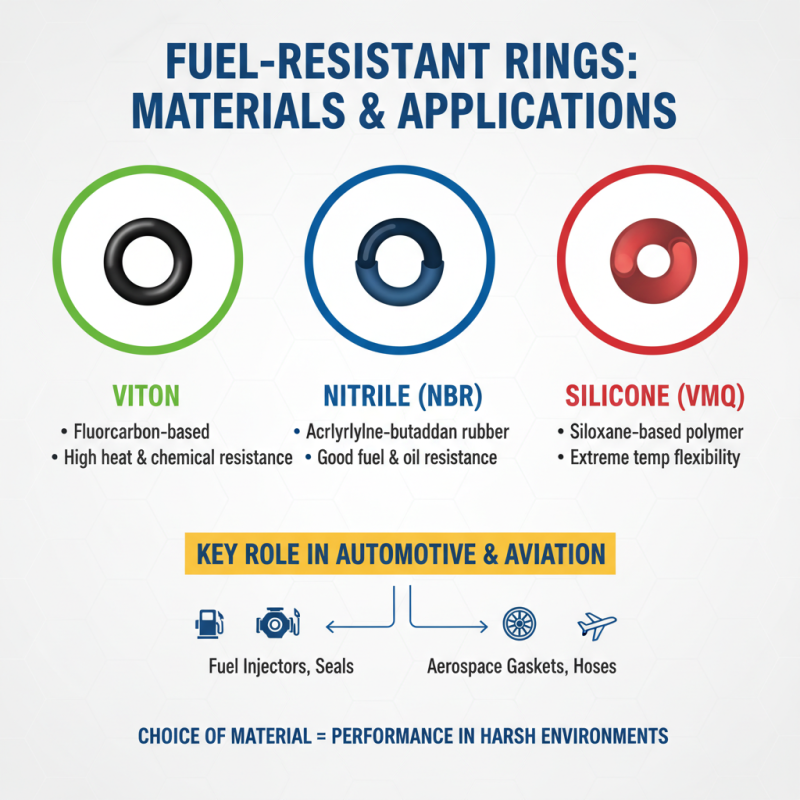
Fuel resistant O rings play a crucial role in various industries, especially in automotive and aviation sectors. The choice of materials used in their production significantly impacts their performance. Common materials include Viton, Nitrile, and Silicone. Each has unique properties that determine resistance to fuel environments.
Viton is noted for its excellent chemical resistance and ability to withstand high temperatures. According to a report by the Society of Automotive Engineers, Viton can perform at temperatures up to 400°F. Nitrile, on the other hand, is cheaper and provides decent resistance to petroleum-based fuels. It can handle temperatures around 250°F but often degrades faster in harsh conditions. Silicone O rings offer flexibility and can handle a wider temperature range, but their chemical resistance is often less effective compared to Viton and Nitrile.
In practice, the selection process is not always straightforward. Factors like cost and availability can complicate decisions. A study from the American Society for Testing and Materials highlights that a failure in O ring performance can lead to significant operational issues. Thus, striking a balance between cost and performance is essential. While Viton may seem ideal, its expense can discourage some manufacturers. It’s worth contemplating the trade-offs between quality and budget in the long run.
Top Features to Look for in High-Quality Fuel Resistant O Rings
When selecting high-quality fuel-resistant O-rings, consider several critical factors.
Material composition is key. Fluoroelastomer (FKM) or nitrile (NBR) are common choices.
They provide excellent resistance to fuels and chemicals. The right material ensures durability and a longer lifespan.
Keep in mind that not all O-rings will perform well in every situation.
Next, pay attention to temperature resistance. Fuel environments can vary from extreme heat to freezing cold.
O-rings must handle these fluctuations to maintain their seal. Another feature is the hardness of the O-ring.
Durometer ratings may influence how well they tolerate fuel exposure. Too soft, and they may not seal properly.
Too hard, and they could crack over time.
Lastly, consider the size and design. A proper fit is essential for effective sealing.
Choose an O-ring with the right dimensions for your application. Innovative designs may offer added benefits like improved flexibility.
These additional features can significantly influence performance. Evaluating these aspects can prevent potential failures and ensure optimal functionality.
Comparative Analysis of the Best Fuel Resistant O Rings in the Market
When selecting fuel resistant O-rings, material choice is crucial for optimal performance. According to industry studies, materials like FKM and Nitrile rubber show superior resistance to fuel degradation. In harsh environments, these materials withstand temperature fluctuations and chemical exposure effectively. Recent market reports highlight that FKM O-rings offer temperature stability from -20°C to 200°C, which enhances their reliability in fuel systems.
A key consideration is the application of these O-rings. Not all O-rings are designed for high-pressure environments. Factors like extrusion resistance and compression set can influence their longevity. Some reports suggest that O-rings made from Hydrogenated Nitrile (HNBR) perform better under extreme pressure. The choice between FKM and HNBR often depends on specific fuel types and service conditions.
However, it’s essential to recognize the limitations of these materials. While they offer remarkable resistance, they are not impervious. Chemical compatibility studies indicate that some fuels can still cause deterioration over time. Users are encouraged to conduct field tests to assess performance. Regular inspections can reveal early signs of failure, ensuring that the system remains safe and efficient.
Conclusion
Fuel Resistant O Rings play a crucial role in ensuring the optimal performance of mechanical systems exposed to fuel and other aggressive substances. This article outlines the significance of these specialized seals, which are designed to withstand harsh conditions while maintaining their integrity. It delves into the key materials used in manufacturing Fuel Resistant O Rings, highlighting their durability and resistance to swelling, hardening, or degradation.
Furthermore, readers can expect to find valuable insights on the essential features to consider when selecting high-quality Fuel Resistant O Rings, such as temperature resistance and chemical compatibility. A comparative analysis of the best options available on the market is included, along with an exploration of the various applications of these O Rings across different industries, underlining their versatility and importance in maintaining system efficiency and safety.