What is a Tiny O Ring and How is it Used in Various Applications?
In the world of industrial components, Tiny O Rings play a crucial role. These small yet powerful seals are often overlooked. Dr. Emily Carter, a leading expert in fluid dynamics, once said, "Tiny O Rings are the unsung heroes of countless applications." This statement resonates deeply within the industry.
Tiny O Rings are utilized in various fields, including aerospace, automotive, and medical devices. Due to their compact size, they excel in sealing off spaces where traditional seals cannot fit. For instance, in the aerospace sector, they ensure that sensitive components remain leak-free, contributing to overall safety.
Despite their importance, many underestimate the precision required in choosing the right Tiny O Rings. Different materials and sizes can significantly affect performance. A simple mistake could lead to substantial failure. Reflecting on this complexity is essential for engineers and manufacturers alike. Understanding the applications and limitations of Tiny O Rings can lead to increased efficiency and reliability in crucial industries.

Definition and Characteristics of Tiny O Rings
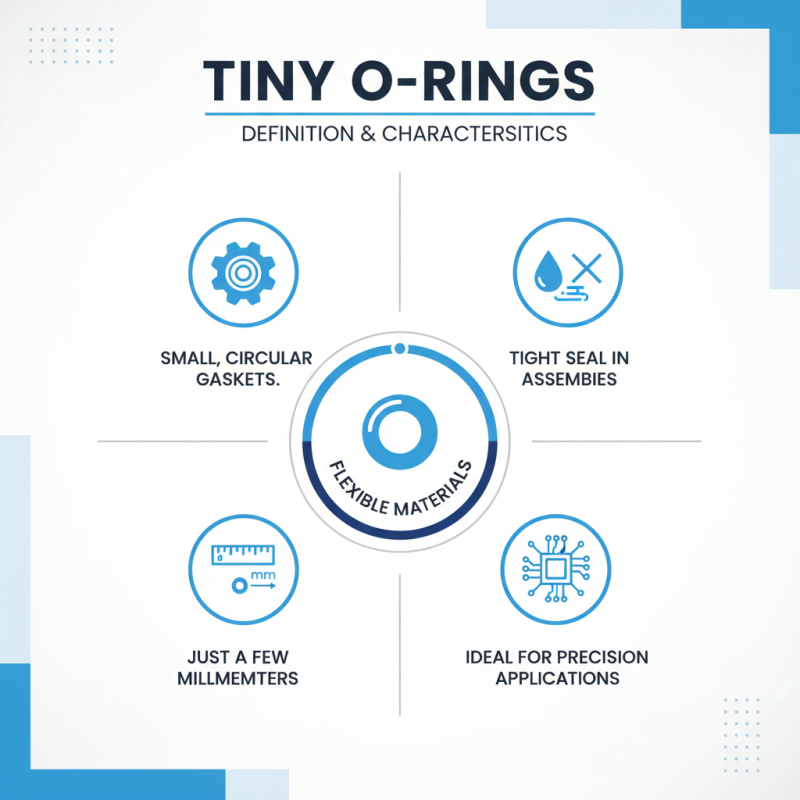
Tiny O rings are essential components in various industries. They are small, circular gaskets made from flexible materials, providing a tight seal in mechanical assemblies. Typically, they measure just a few millimeters in diameter. Their compact size allows them to fit into intricate parts, making them ideal for precision applications.
In designing systems, engineers often overlook the importance of choosing the right O ring material. Different environments require specific materials for optimal performance. For example, exposure to high temperatures or chemicals can degrade some materials quickly. Consequently, testing under realistic conditions is crucial. Failure to do so can lead to leaks or mechanical failures, which may be costly.
Tiny O rings are commonly used in automotive, aerospace, and medical devices. In automotive applications, they help seal fuel systems, preventing leaks. In aerospace, they ensure the integrity of hydraulic systems. These rings play a critical role in maintaining functionality. However, improper sizing or installation can lead to issues. Remember to double-check measurements and installation processes. Small mistakes can have significant impacts on overall system performance.
Common Materials Used for Tiny O Rings
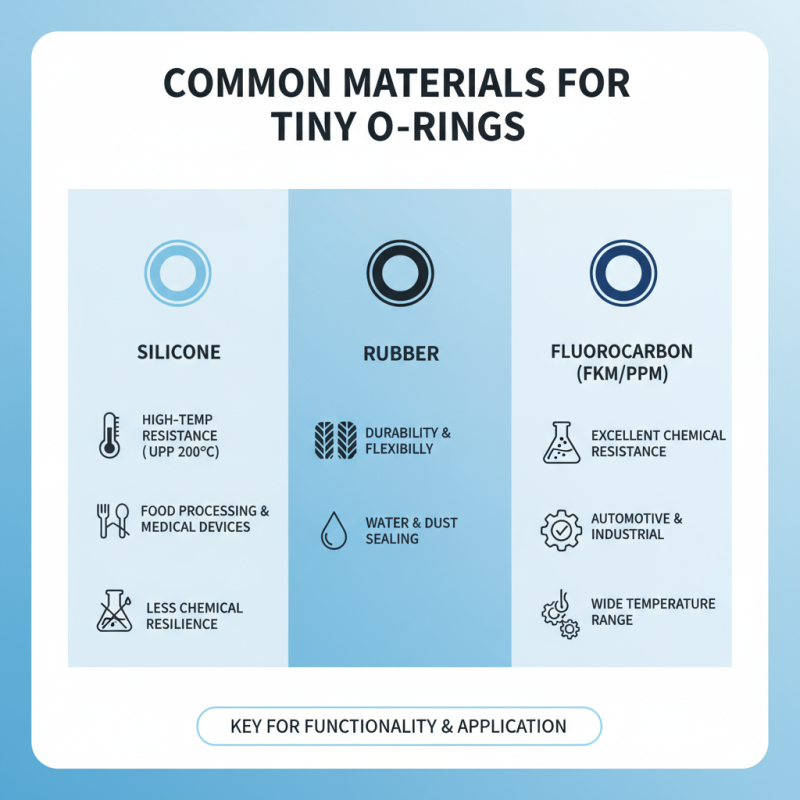
When discussing tiny O rings, materials play a crucial role in their functionality. Commonly used materials include silicone, rubber, and fluorocarbon. Silicone O rings are prized for their high-temperature resistance, often up to 200°C. This makes them ideal for applications in food processing and medical devices. However, they can be less resilient to certain chemicals.
Rubber O rings are another popular choice. They are versatile and offer decent elasticity. But their lifespan can be short if exposed to extreme conditions. Many industries, from automotive to aerospace, rely on rubber O rings for sealing solutions. A study showed that rubber O rings can degrade significantly after just a few months of exposure to oil. This raises questions about their long-term effectiveness.
Fluorocarbon O rings are known for their chemical resistance. They can withstand harsh substances. Yet, they tend to be more expensive. The decision to use fluorocarbon often hinges on the specific application's needs. A recent industry report highlighted that while fluorocarbon O rings serve niche markets, their high cost limits widespread adoption. The balance between cost and performance remains a topic for consideration in ongoing discussions among engineers and manufacturers.
Applications of Tiny O Rings in Various Industries
Tiny O rings are versatile components used across various industries. Their small size doesn’t limit their effectiveness. Instead, they provide crucial sealing solutions in multiple applications. For instance, in automotive systems, they help prevent fluid leaks. This is critical for maintaining the integrity of engine components. Without them, even a small leak can cause significant damage.
In the medical field, Tiny O rings play an essential role. They create airtight seals in devices like syringes and pumps. Ensuring the proper function of these devices is vital for patient safety. Moreover, in electronics, these seals protect sensitive components from moisture and dust. The presence of Tiny O rings can extend the life of electronic devices. However, improper sizing can lead to problems. An O ring that’s too small may not seal correctly, leading to malfunction.
Overall, Tiny O rings are small yet impactful parts. Their applications span many industries, each needing precise specifications. Whether in machinery or household items, their reliability is fundamental. Still, one must carefully consider material choices and sizes during production. A small oversight can have big consequences.
Benefits of Using Tiny O Rings in Sealing Solutions
Tiny O rings play an essential role in many sealing solutions. Their compact size makes them ideal for tight spaces. They are used in industries like automotive, aerospace, and electronics. Reports show that O rings reduce leakage by up to 50% in specific applications. This effectiveness enhances overall efficiency in machinery and equipment.
Using tiny O rings offers several benefits. First, they provide superior sealing capabilities. They can withstand high pressures and temperatures. This leads to increased durability in harsh environments. Additionally, they are cost-effective. Small parts can significantly impact budget projections in manufacturing. For instance, one study indicated a 30% reduction in failure rates when tiny O rings were employed.
Tips: Ensure proper sizing when selecting an O ring. An improper fit can lead to failures and leaks. Regular maintenance is also vital to keep seals in prime condition. This can avoid unexpected downtimes in operations. Remember, attention to detail matters. A tiny ring can lead to significant impacts on performance.
Applications of Tiny O Rings in Various Industries
Maintenance and Replacement Considerations for Tiny O Rings
Tiny O rings play a critical role in various applications. They create seals in small devices, ensuring proper function. Regular maintenance is vital to avoid leaks. Inspecting O rings for wear can prevent larger issues.
When considering replacement, choose the right size and material. A mismatch can lead to failure. Sometimes, O rings appear fine but may still need replacing. Environmental factors, such as heat or chemicals, can degrade them faster than expected.
Periodically checking installation is also essential. An improperly seated O ring can cause leaks. Remember, prevention is often more cost-effective than repairs. Pay attention to details during maintenance tasks to prolong the life of tiny O rings.