Moken (Xiamen) Industrial Co., Ltd.
Leave Your Message

10 Essential Tips for Choosing Tank O Ring Seal

In the world of industrial sealing solutions, the choice of a Tank O Ring Seal can significantly impact operational efficiency and equipment reliability. Industry reports indicate that improper seal selection can lead to leakage rates soaring above 15%, which directly affects maintenance costs and production timelines. As Richard McAllister, a leading expert in sealing technologies, stated, "Choosing the right Tank O Ring Seal is not just about fit; it’s about ensuring the entire system functions correctly.”

Selecting a Tank O Ring Seal requires attention to materials, dimensions, and environmental factors. Different applications demand specific properties, like chemical resistance or temperature tolerance. Many industries overlook these details, leading to suboptimal performance. Research shows that 30% of sealing failures are due to insufficient material properties for the application. This highlights a need for careful assessment and expert guidance in the selection process.

Moreover, the market is flooded with options, yet not all seals are equal. Some may seem cost-effective initially but can result in higher long-term expenses due to frequent replacements. This dilemma often leaves organizations reflecting on their choices. Proper education on Tank O Ring Seal specifications and proper selection methods can empower engineers and maintenance teams to make informed decisions, fostering efficiency and longevity in their operations.
10 Essential Tips for Choosing Tank O Ring Seal

Understanding the Role of O Ring Seals in Tank Applications

10 Essential Tips for Choosing Tank O Ring Seal

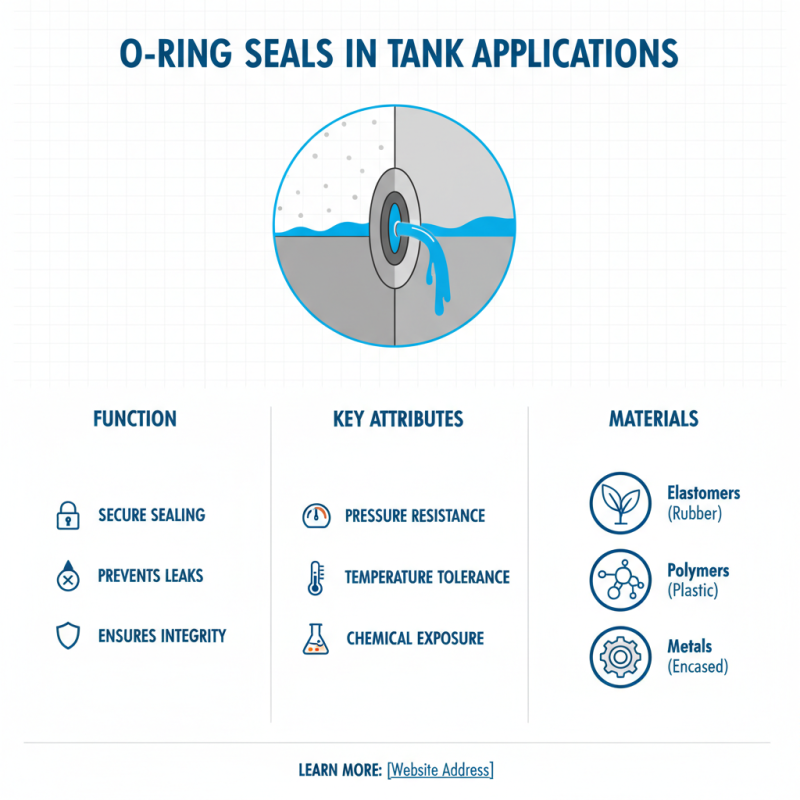
O-ring seals play a crucial role in tank applications. They provide a secure sealing solution, preventing leaks and ensuring the integrity of the contents. Made from various materials, O-rings must withstand pressure, temperature, and chemical exposure. Understanding their functions is key to making informed choices.

Selecting the right O-ring involves careful consideration. The size, material, and design will influence performance. Not all materials are suitable for every tank application. For instance, some may degrade quickly when exposed to certain chemicals. Reflecting on past choices can help avoid repeating mistakes.

Installation is equally important. Improper placement can lead to failures. A slight misalignment can cause leaks, negating all efforts to seal effectively. Regular maintenance checks can prevent unexpected issues. Remember, a small oversight today may lead to bigger problems tomorrow.

Material Options for Tank O Ring Seals: A Comprehensive Guide

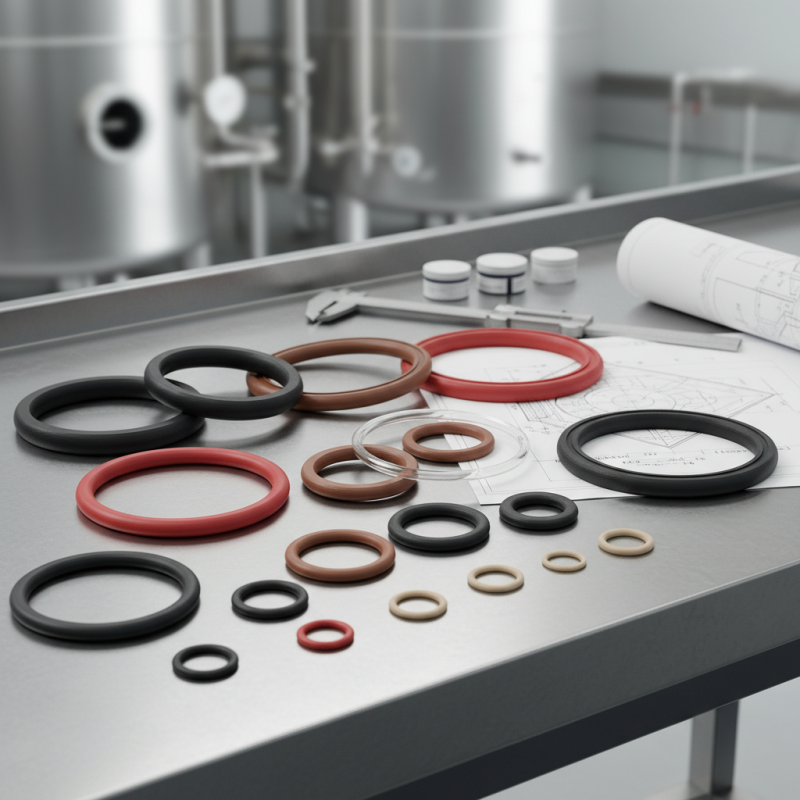
When selecting the right O ring seal for your tank, material is critical. Various materials offer different benefits. For instance, rubber is affordable and resistive to common chemicals. Nitrile is often used for fuel applications, while silicone provides excellent heat resistance. Each material responds uniquely to temperature and pressure changes.

Pay attention to the specific environment where the O ring will be used. Consider the temperature range it must withstand. Extreme conditions can degrade certain materials. For example, natural rubber may crack in harsh sunlight, while silicone may lose its flexibility over time.

Here are some essential tips. Always check compatibility with the fluids in your tank. A mismatch can lead to seal failure. Measure the tank's fitting correctly. An improper fit could cause leaks. Lastly, don’t forget to consider UV exposure. Choosing the best material for your application could save you from future headaches.

Material Options for Tank O Ring Seals

This chart represents the common applications of various material options for tank O-ring seals. Nitrile is the most widely used material, followed by Viton and Silicone.

Key Dimensions to Consider When Selecting Tank O Ring Seals

When selecting tank O ring seals, key dimensions play a crucial role. The inner diameter must match the fitting it seals. If it’s too small, it won’t fit. If it’s too large, leaks can occur. Additionally, the cross-section thickness is vital for ensuring a proper seal. A thicker O ring may provide a better grip but can also be harder to install.

Another important dimension to consider is the material compatibility. Different materials can withstand varying pressures and temperatures. You must choose an O ring that suits your specific application. Understanding your environment helps in making better choices. Sometimes, this process involves trial and error. Make sure to double-check every measurement before making a purchase.

It’s easy to overlook small details. Even minor discrepancies can lead to major issues. For instance, a miscalculated groove width can render the seal ineffective. Always consider the compression set and hardness of the O ring. These factors affect performance over time. Testing under actual conditions is recommended for the best results.

10 Essential Tips for Choosing Tank O Ring Seal - Key Dimensions to Consider When Selecting Tank O Ring Seals

Dimension Description Importance Common Sizes
Inner Diameter (ID) The diameter of the hole where the O-ring will sit. Critical for ensuring a perfect fit. 1.5", 2.0", 3.0"
Outer Diameter (OD) The overall diameter of the O-ring. Ensures compatibility with sealing surfaces. 2.5", 3.5", 4.5"
Cross-Section Diameter The thickness of the O-ring. Influences the sealing pressure and capability. 0.1", 0.2", 0.3"
Material Type Material from which the O-ring is made. Determines temperature and chemical resistance. EPDM, Nitrile, Viton
Temperature Range The temperature extremes the O-ring can withstand. Essential for long-service life in specific environments. -20°F to 400°F
Durometer Hardness Measure of the O-ring's hardness. Affects squeeze and sealing capacity. 70 Shore A, 90 Shore A
Chemical Compatibility How well the O-ring material resists various chemicals. Important for preventing degradation and leaks. Nitrile for oils, Viton for solvents
Pressure Rating Maximum pressure at which the O-ring can perform reliably. Critical for applications with high pressure. Up to 300 psi
Installation Considerations Easiness of installation and removal. Impacts maintenance processes. Standard grooves for easier fit

Environmental Factors Impacting the Performance of O Ring Seals

When choosing an O-ring seal, environmental factors play a crucial role. Temperature, humidity, and exposure to chemicals can greatly affect their performance. Research indicates that O-rings can lose up to 50% of their sealing capability over time when exposed to harsh conditions. An increase in temperature can cause the material to expand, potentially leading to leakage.

Chemical exposure adds another layer of complexity. O-rings might degrade quickly when in contact with solvents or oils. According to a report from the Rubber Manufacturers Association, 75% of O-ring failures are attributed to improper material selection. Choosing the right material for specific environmental conditions can prevent costly leaks and equipment failures.

Monitoring these factors is essential. Detailed studies show that O-rings exposed to high UV radiation shorten their lifespan significantly. Regular inspections can identify early signs of wear. Awareness of environmental impacts allows for better decision-making. Failure to consider these factors can lead to unexpected downtimes.

Installation Tips for Ensuring the Longevity of Tank O Ring Seals

Choosing the right O-ring seal for your tank is crucial for performance and durability. Installation plays a significant role in ensuring these seals last. A recent industry report shows that improper installation accounts for over 30% of O-ring failures. It’s vital to follow best practices during installation.

One key tip is to ensure a clean surface before installation. Dirt and debris can compromise the integrity of the seal. Even the smallest particle can lead to leaks.

Another important step is to check the O-ring size. An incorrect size can cause excessive compression or gaps. The seal needs to fit snugly to function properly.

Lastly, use lubricant designed for O-rings to reduce friction during installation. This helps the O-ring settle into place without distortion. However, don’t over-lubricate; too much can attract dirt. Monitor the installation closely. Recognizing these nuances can improve longevity significantly.