How to Choose High Temp Orings for Your Applications?
Choosing the right High Temp O-rings for specific applications is crucial in many industries. According to Mark Thompson, a leading expert in sealing technologies, “The selection of materials can make or break performance.” High Temp O-rings are designed to withstand extreme temperatures. Using the wrong material can lead to failures, increasing costs.
The variety of materials available can add complexity. For example, silicone, fluorocarbon, and PTFE each has different temperature limits and chemical resistances. Real-world applications often reveal unexpected challenges, such as degradation over time. It's vital to analyze operational conditions carefully.
Understanding these parameters can prevent costly mistakes. Engineers often overlook critical details when selecting High Temp O-rings. Regular reviews of application requirements can help refine choices. In the end, the focus should be on performance. Balancing cost and reliability is key, yet rarely straightforward.
Understanding High Temp O-Rings: Key Features and Materials
High-temperature O-rings are essential in many applications. They perform well in harsh environments, exposing them to heat, chemicals, and pressure. It is crucial to understand their key features and materials. Certain elastomers can handle elevated temperatures, like fluorocarbon and silicone. These materials ensure that O-rings maintain their integrity under extreme conditions.
When choosing high-temp O-rings, consider the operating temperature range and chemical compatibility. Some rings handle hotter environments better than others. Always check the specific range of the material. This prevents unexpected failures.
**Tip:** Test a small sample first. It helps in understanding performance without risking large quantities.
Also, think about the O-ring's compression set. A low compression set means the O-ring retains its shape. This feature ensures a proper seal over time.
**Tip:** Monitor usage over time. Frequent replacements could indicate a mismatch in the O-ring material.
Choosing the right material can be complex. Yet, careful assessment pays off in reliability and performance. Aim for a balance between cost and quality. Your application deserves the best.
How to Choose High Temp O-Rings for Your Applications?
| Material |
Temperature Range (°C) |
Chemical Resistance |
Common Applications |
| Fluorocarbon (FKM) |
-20 to 200 |
Excellent with oils, fuels, and high-temperature fluids |
Automotive, aerospace, chemical processing |
| Silicone (VMQ) |
-55 to 200 |
Good with water and some chemicals, not oil resistant |
Food processing, medical devices, HVAC |
| Polyurethane (AU) |
-30 to 80 |
Good with oils and fuels, not suitable for ozone |
Hydraulic applications, machinery |
| EPDM |
-40 to 120 |
Excellent with water and steam, poor with petroleum products |
Automotive weather seals, beverage processing |
| Perfluoroelastomer (FFKM) |
-15 to 315 |
Outstanding in strong acids, bases, and extreme temperatures |
Semiconductor, chemical processing |
Evaluating Temperature Ratings for O-Rings in Different Applications
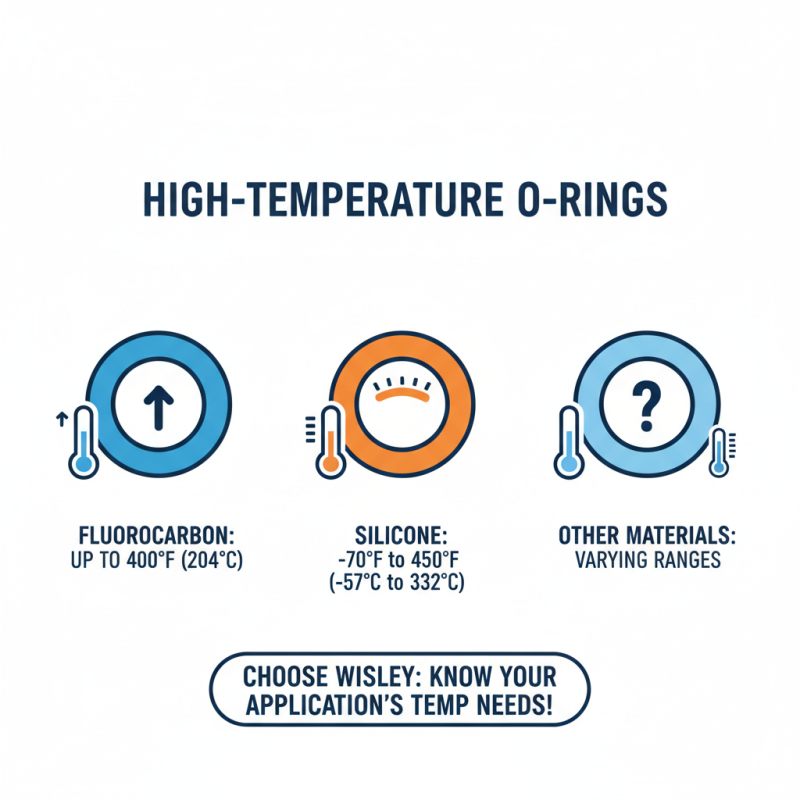
When selecting high-temperature O-rings, understanding temperature ratings is crucial. Different applications require specific materials to withstand various heat levels. For instance, O-rings made from fluorocarbon can handle temperatures up to 400°F. However, other materials like silicone might only work well between -70°F and 450°F. Knowing the operating range is vital.
In many industrial applications, high thermal stability is non-negotiable. Oxygen levels, exposure to chemicals, and physical stressors can all impact performance. For example, in an automotive setting, O-rings might be subjected to extreme heat from the engine. A failure here can lead to catastrophic results.
Sometimes, users underestimate heat factors. They might choose a material without factoring in external conditions. This can lead to premature failure of O-rings. Ensuring you have the right information about temperature ratings is the key. It is beneficial to consult with experts, even if you feel confident in your choice.
Assessing Compatibility: O-Ring Materials vs. Chemical Exposure
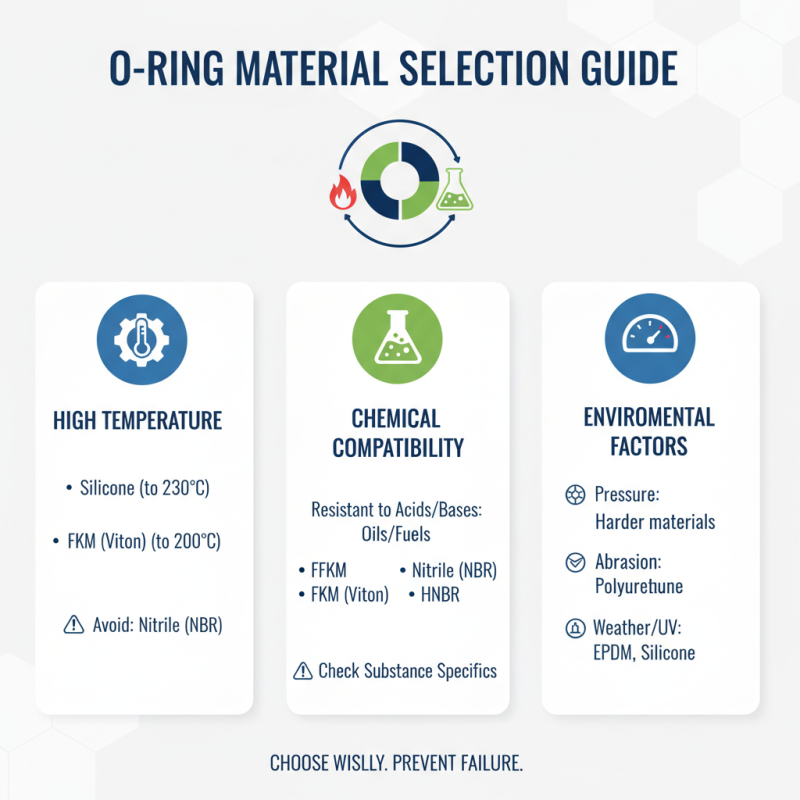
Choosing the right O-ring material is crucial for any application involving high temperatures. Compatibility with chemicals is essential. Different materials can react adversely when exposed to specific substances. This can lead to swelling, hardening, or complete failure of the O-ring. Consider the environment where the O-ring will be used. Factors like temperature, pressure, and exposure to chemicals significantly affect performance.
Fluoroelastomers are popular for their high temperature resistance. Yet, they may not withstand all chemicals. Nitrile rubber, on the other hand, is widely used in oil applications but struggles with extreme heat. Understanding these nuances is vital. A mismatch can result in costly downtime or system failures. Conduct compatibility tests to ensure reliability.
It's easy to overlook details amid complex designs. Many may assume all materials will perform similarly. This can lead to serious issues. Reflect on your specific application and test various O-rings under real conditions. This approach can save time and resources in the long run. Make informed choices, and don’t hesitate to seek expert advice when needed.
Sizing Considerations: Selecting the Right O-Ring Dimensions
When it comes to selecting high-temperature O-rings, proper sizing is crucial. The right dimensions not only ensure a secure seal but also enhance performance across various applications. According to industry standards, the most common sizes fall within the range of AS568. This offers a comprehensive selection for engineers and manufacturers alike.
Consider the inner diameter and cross-sectional diameter carefully. The inner diameter affects how well the O-ring fits in its groove. A tight fit prevents leakage but can cause excessive wear. Conversely, a loose fit may lead to seal failure. Many guides recommend calculating the stretch of the O-ring to find the best fit.
Temperature can significantly affect O-ring behavior. As temperatures rise, materials can expand. This may alter the intended seal. In some applications, a slight adjustment of 5% in size can drastically impact performance. Regularly reviewing temperature ranges and O-ring elasticity should be part of your maintenance protocol. Understanding these sizing principles can prevent costly downtime in critical systems.
Industry Standards and Testing: Ensuring Quality in High Temp O-Rings
When selecting high-temperature O-rings, it's crucial to adhere to industry standards. The Society of Automotive Engineers (SAE) outlines several testing parameters. These include resistance to high heat and various fluids. O-rings subjected to elevated temperatures can experience swelling and degradation if not tested properly. Industry practices suggest O-rings operate up to 300°C. Thus, choosing the right material is vital for performance and longevity.
Quality testing methods play a significant role in determining the reliability of high-temp O-rings. A report by ASTM provides insight into tensile strength and compression set tests. These tests evaluate how materials respond under pressure and heat stress. A notable finding shows that O-rings with a compression set less than 20% generally perform better. However, the correlation between testing and real-world application can sometimes be inconsistent.
It's essential to understand that not all O-rings that pass testing perform equally well in practical applications. Variations in manufacturing processes can lead to unknown defects. Regular quality checks become necessary to ensure consistency. In fact, reports indicate that up to 15% of O-rings can fail after short operational periods. This highlights the importance of rigorous industry standards in maintaining product quality.
Temperature Resistance of Different O-Ring Materials