2026 How to Choose the Right Gas Resistant O Rings for Your Applications?
Choosing the right Gas Resistant O Rings for your applications can be challenging. As industry expert John Smith states, "The right O-ring can make or break a project's success." Gas Resistant O Rings are essential in many sectors. They ensure seals remain intact under various temperatures and pressures.
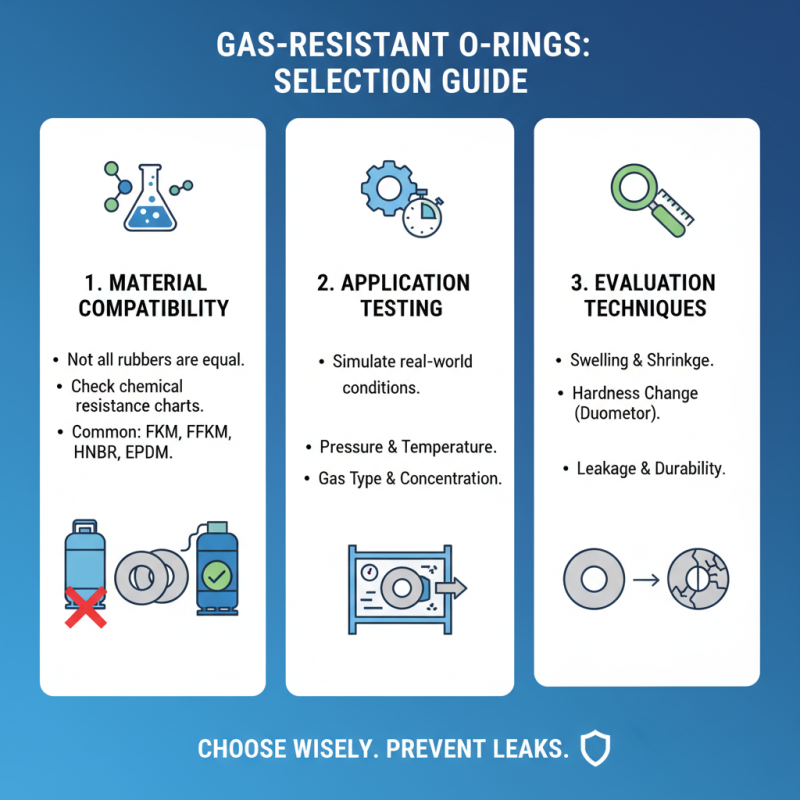
Understanding the materials is vital. Different gases require different resistance levels. Some O rings may perform well under one condition but fail under another. This complexity can lead to costly mistakes. Selecting the wrong type may compromise system integrity.
Users often overlook the long-term effects of choosing an inappropriate seal. Factors like aging, temperature variations, and gas composition should not be ignored. Accurate assessments can prevent leaks and downtimes. Trustworthy suppliers can provide valuable insights. They can help you make informed decisions for optimal results.
Understanding Gas Resistant O-Rings: Types and Materials
Gas resistant O-rings play a crucial role in various applications, especially in industries involving gas handling. Understanding the types and materials of these O-rings is essential for ensuring safety and reliability. Common materials include nitrile, fluorocarbon, and silicone. Each material presents unique strengths and weaknesses. For example, nitrile offers good resistance to fuels and oils, but has limitations with certain gases.
Fluorocarbon O-rings excel in high-temperature environments. They provide outstanding chemical resistance but can be more costly. The choice of material often hinges on the specific gas and environment. A recent report indicated that up to 30% of O-ring failures in the gas industry can be attributed to material incompatibility.
Selecting the right type involves not just material composition but also size and design. Some applications may require custom sizes or cross-sections. Small design flaws can lead to significant leaks. Thus, it’s crucial to analyze specific requirements thoroughly. Not addressing these factors can result in costly downtimes or safety hazards. Understanding this complexity is key to making informed decisions.
2026 How to Choose the Right Gas Resistant O Rings for Your Applications?
| Material Type |
Temperature Range (°C) |
Pressure Resistance (bar) |
Chemical Resistance |
Applications |
| Nitrile Rubber (NBR) |
-40 to 100 |
20 |
Oil, fuel, hydraulic fluids |
Automotive, industrial machinery |
| Fluorocarbon (FKM) |
-20 to 200 |
25 |
Acids, oils, fuels |
Chemical processing, aerospace |
| Silicone Rubber (SI) |
-60 to 200 |
15 |
Limited chemical resistance |
Food processing, medical |
| Ethylene Propylene Diene Monomer (EPDM) |
-40 to 150 |
20 |
Water, steam, polar solvents |
Automotive, roofing |
| Aflas |
-10 to 200 |
30 |
Acids, alkalis, steam |
Chemical processing, oil and gas |
Key Factors Influencing Gas Resistance in O-Rings
When selecting gas resistant O-rings, understanding key factors is crucial. Material choice plays a significant role. Fluorocarbon rubber is popular due to its excellent resistance. However, it may not suit every application. Temperature fluctuations can degrade performance, leading to leaks. Consider the operating environment carefully.
Another important factor is the pressure of the gas. High-pressure applications require specially formulated O-rings. The size of the ring also matters. Even slight variations can lead to failure. Consider the groove design where the O-ring will sit. It impacts how well the ring seals the gas.
Compatibility with the gas type is essential too. Some gases react poorly with certain materials. This reaction can weaken the O-ring over time. Testing with real-world conditions is advisable. Relying solely on specifications can be misleading. Each application has unique challenges that demand attention.
Industry Standards and Specifications for Gas Resistant O-Rings
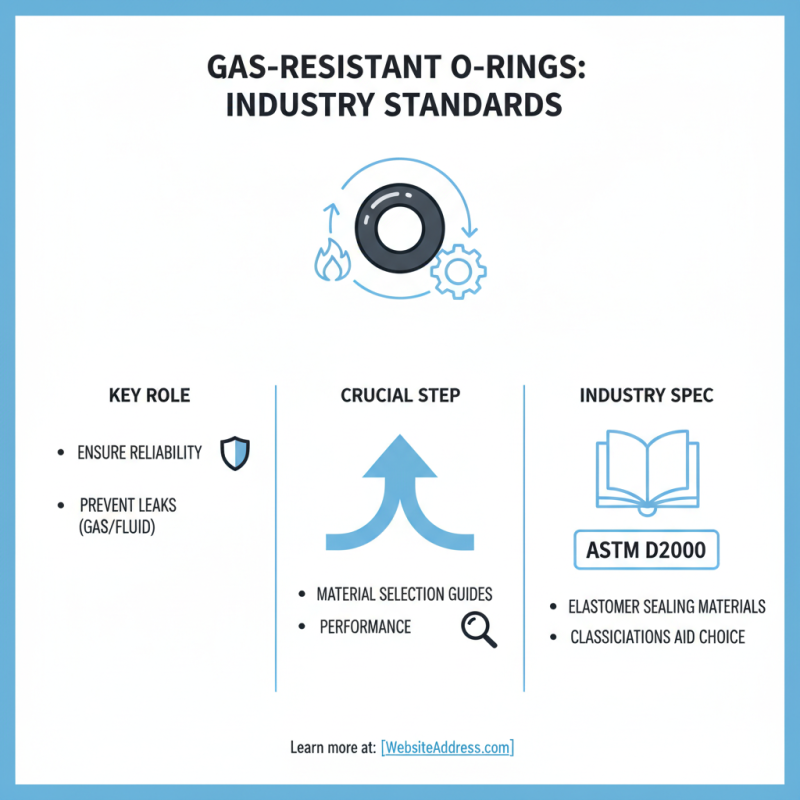
When selecting gas resistant O-rings, understanding industry standards is crucial. Various specifications guide material selection. These standards ensure that O-rings perform reliably. For instance, ASTM D2000 outlines the requirements for elastomer sealing materials. Familiarity with these classifications can help in choosing the right product.
Material compatibility is another key factor. Different gases require specific resistance properties. Nitrile and fluorocarbon elastomers are popular choices. However, not every material is suitable for every application. Tests often reveal unexpected weaknesses. Always consider the gas type, pressure, and temperature.
Regulatory compliance matters too. Certain industries need to meet strict guidelines. Failing to adhere can lead to costly mistakes. Regular updates in industry standards make staying informed essential. It’s a challenge, but necessary for effective use of gas resistant O-rings. Reflection and ongoing learning in material science are vital in this evolving field.
Applications and Use Cases of Gas Resistant O-Rings
Gas resistant O-rings play a crucial role in various applications. They provide reliable sealing solutions in environments where gases are present. From automotive industries to aerospace, these O-rings ensure the integrity of systems under pressure. Chemical processing facilities also rely on gas resistant O-rings to maintain safety and efficiency.
Applications for gas resistant O-rings include fuel lines, pneumatic systems, and HVAC components. Selecting the right material is essential. Consider the type of gas, temperature, and pressure when making your choice. This decision impacts performance and longevity.
**Tips:** Always check compatibility with gases. Perform a simple test if unsure. Regular inspections can save you from expensive failures. Make sure to address any signs of wear early. This proactive approach is essential for optimal performance.
Gas Resistant O-Rings Performance in Different Environments